 ›
›
1. Measuring physical quantities
Almost every experiment starts with a measurement. There are five physical quantities you must be able to measure in the lab, each with an SI unit and its own apparatus.
| Quantity | SI unit | Common apparatus | Worth remembering |
|---|---|---|---|
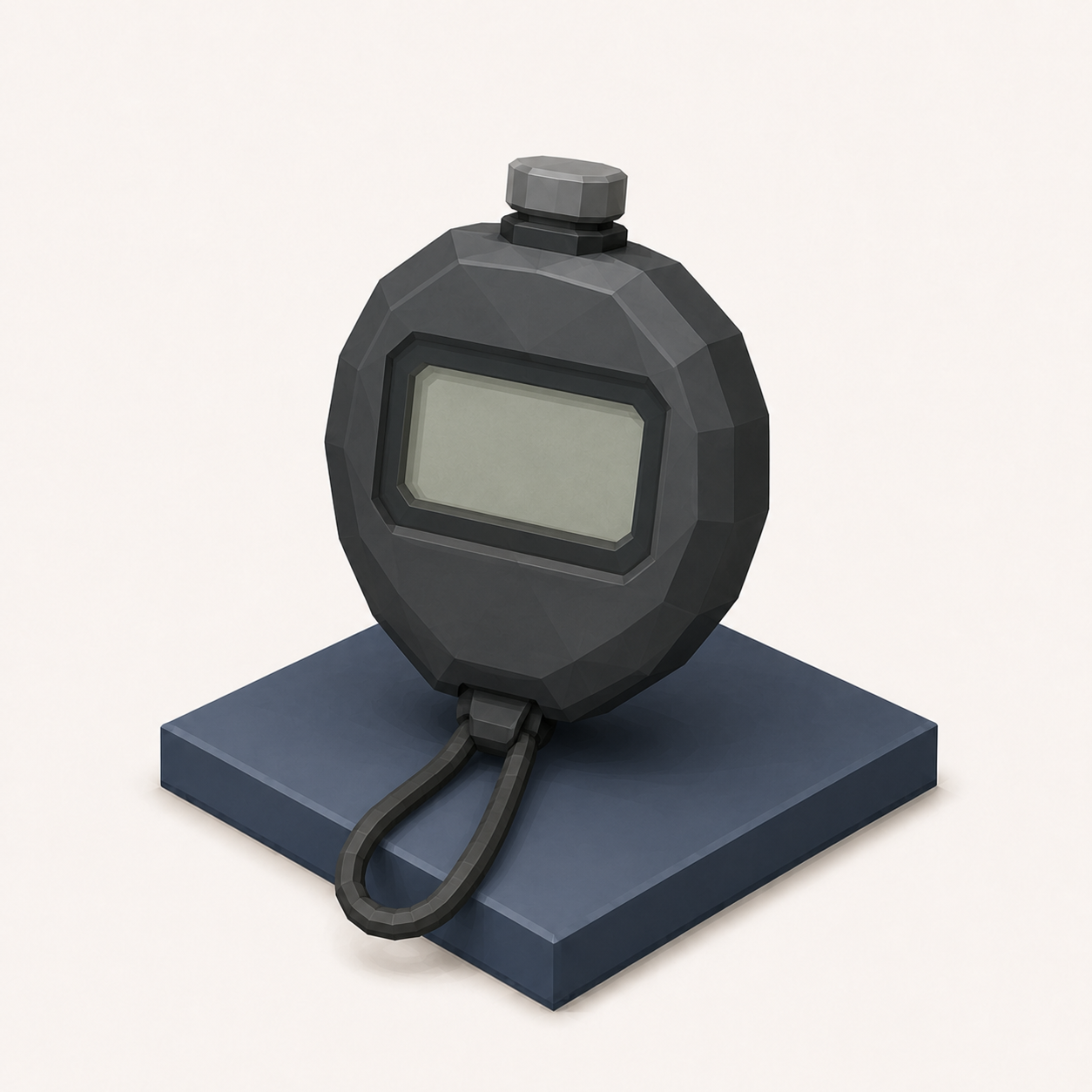
| Time | second (s) | Digital stopwatch | A digital stopwatch reads to ±0.01 s. |
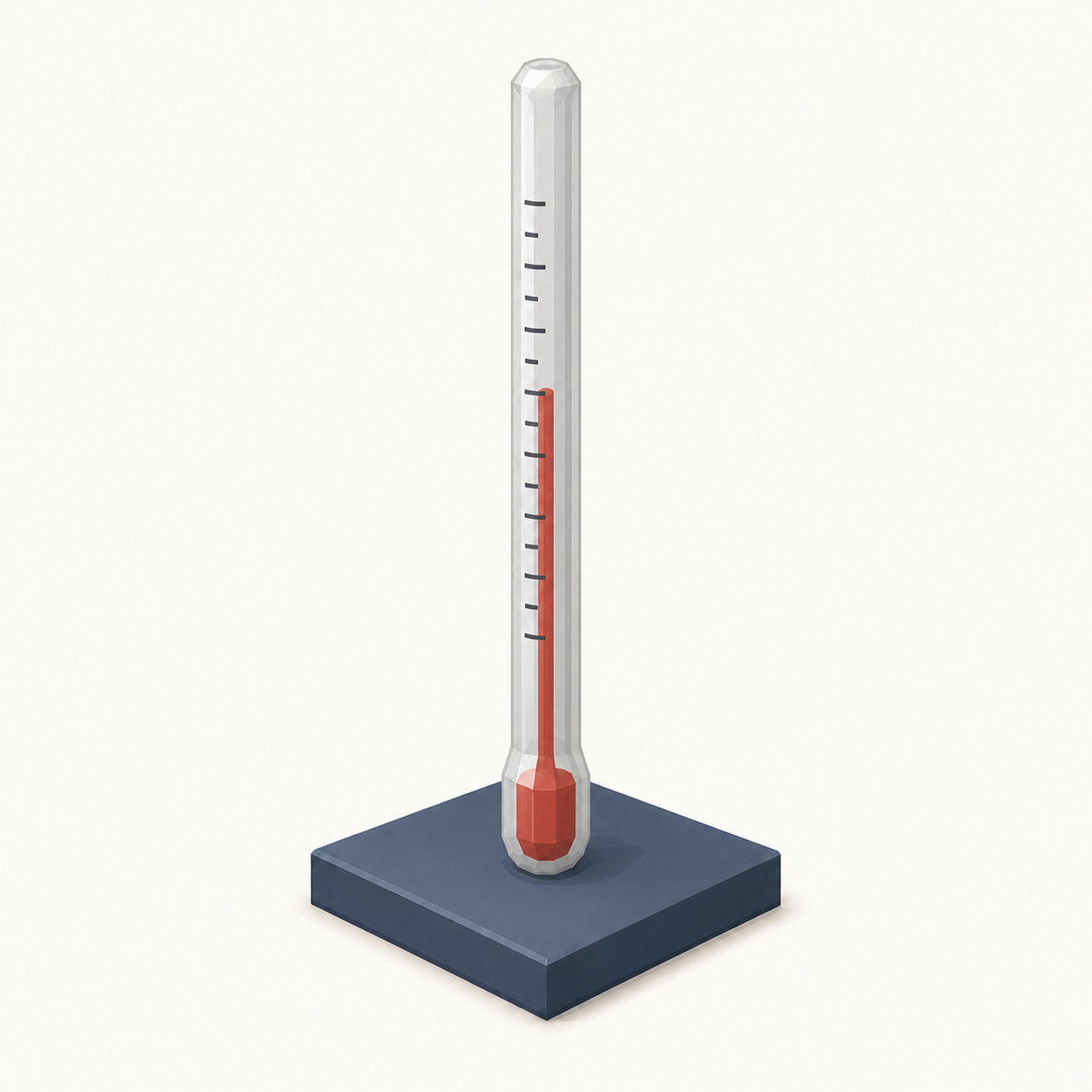
| Temperature | kelvin (K) | Thermometer (an alcohol thermometer typically covers about −10 °C to 110 °C) | Convert with K = °C + 273. A kelvin temperature can never be negative. |
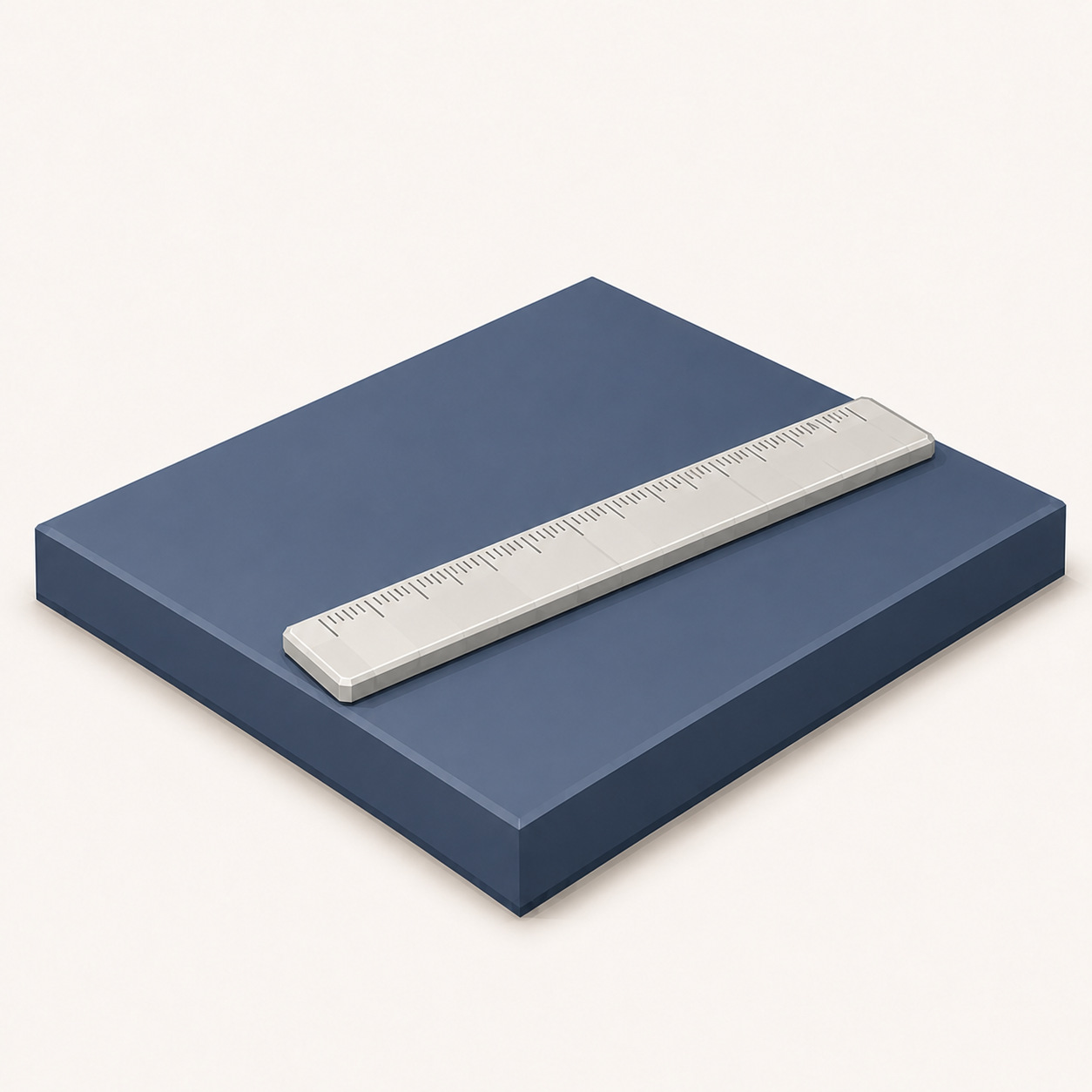
| Length | metre (m) | Metre rule | Reads to ±0.1 cm (1 mm). |
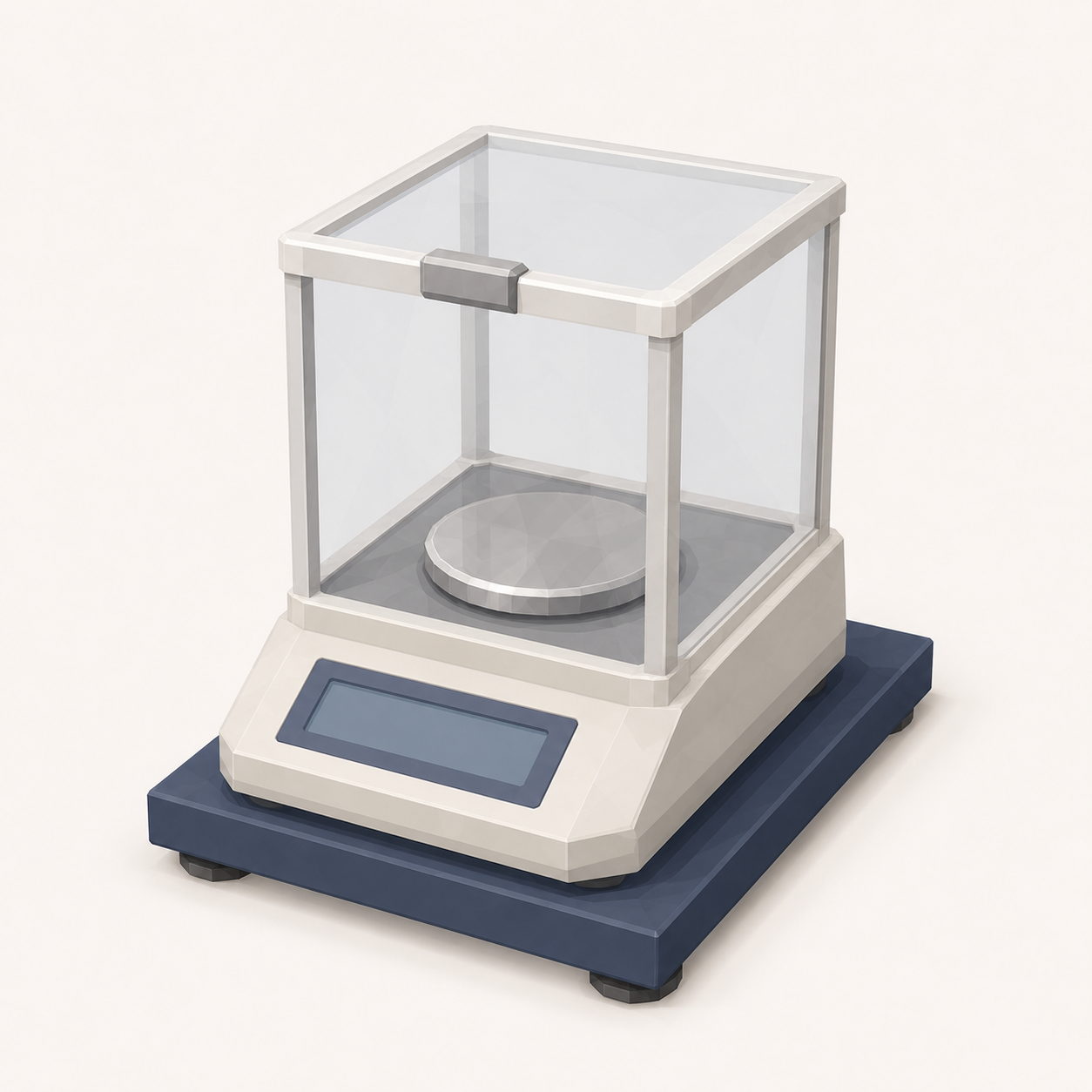
| Mass | kilogram (kg) | Electronic balance | Reads to ±0.01 g. |
| Volume | cubic metre (m³) | Pipette, volumetric flask, measuring cylinder, burette, gas syringe | In the lab we usually work in cm³ and dm³ — see below. |
Choosing the right volume apparatus
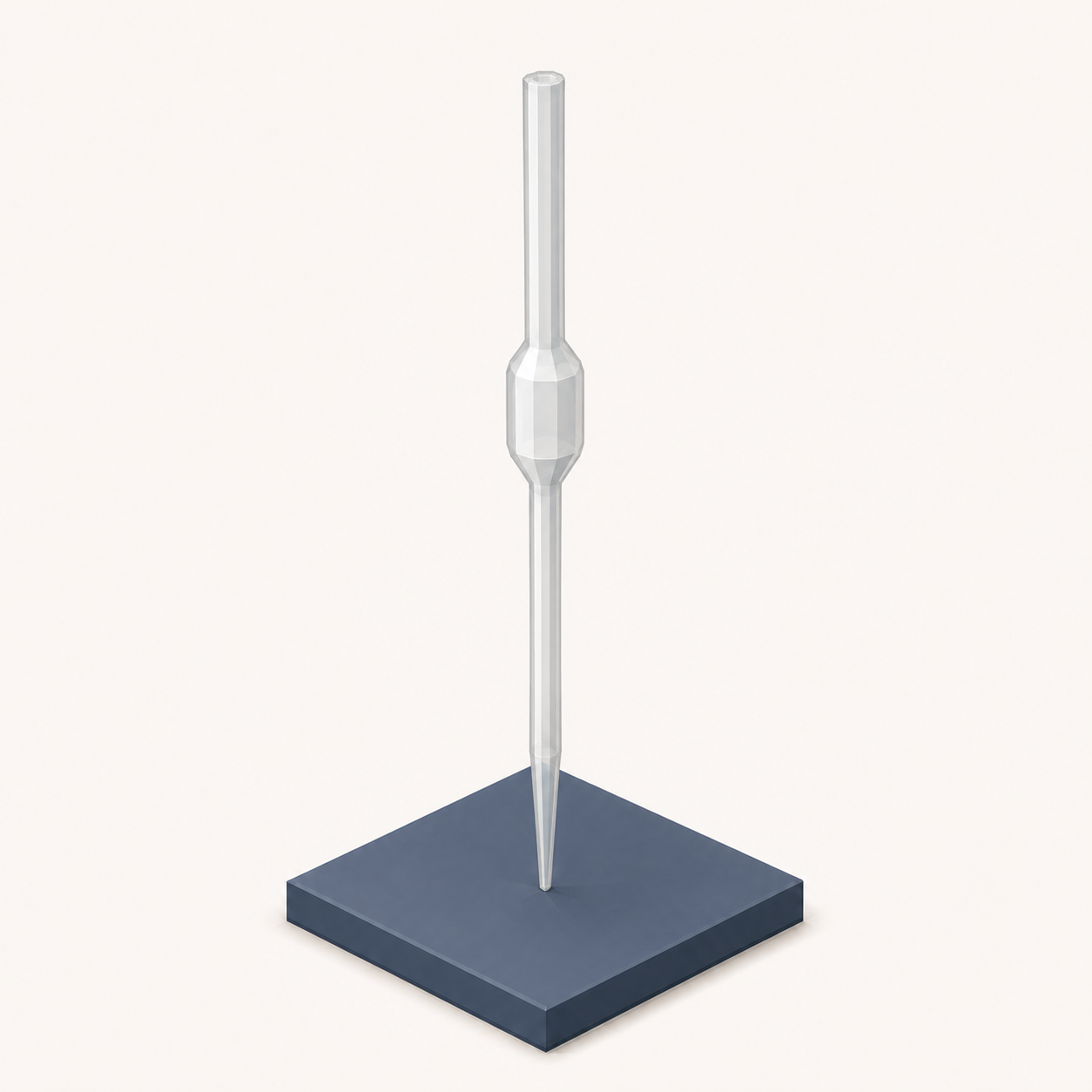
- Pipette — delivers one fixed volume very accurately, for example exactly 25.0 cm³. Used in titrations.
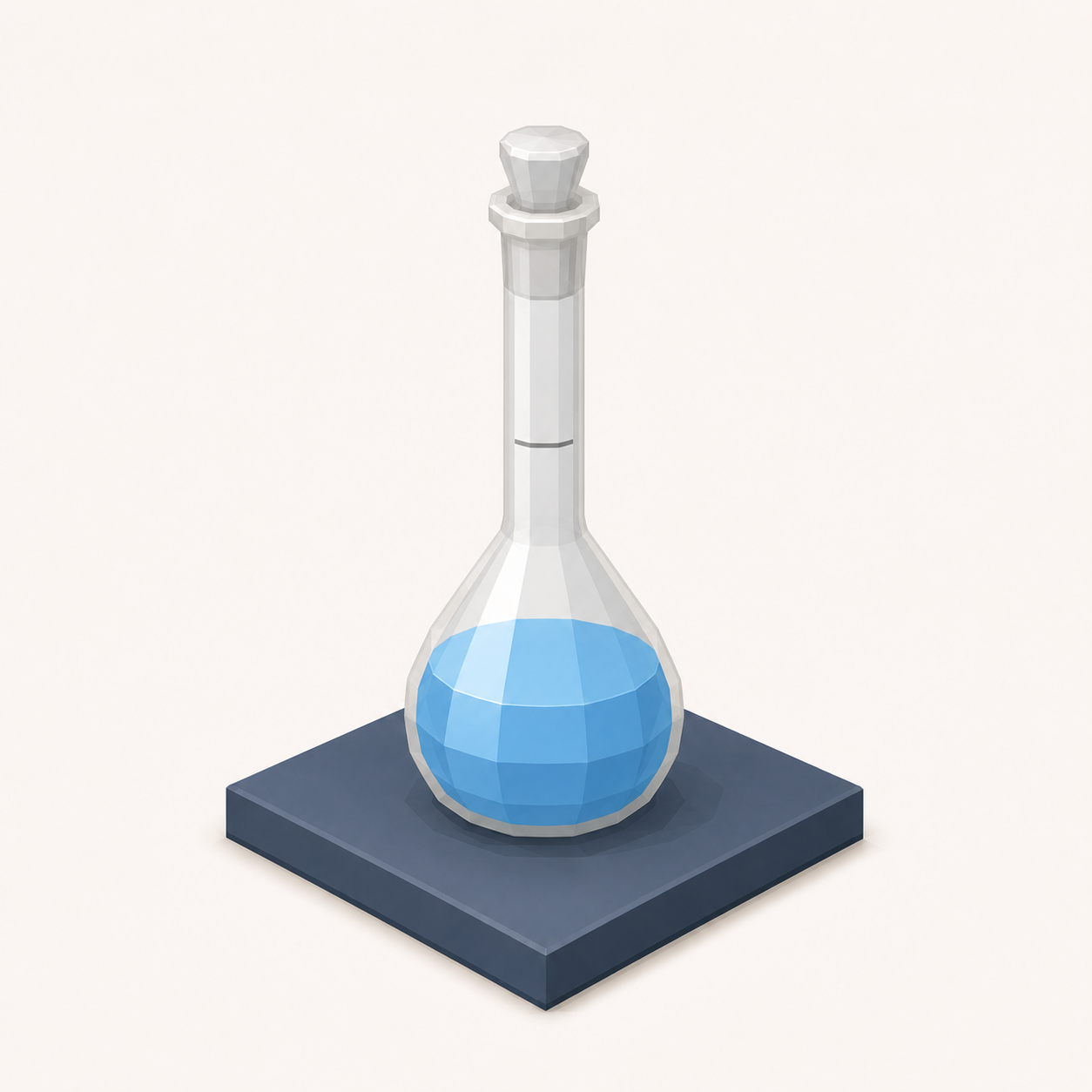
- Volumetric flask — holds one fixed, larger volume accurately (e.g. 250 cm³), used for making up standard solutions.
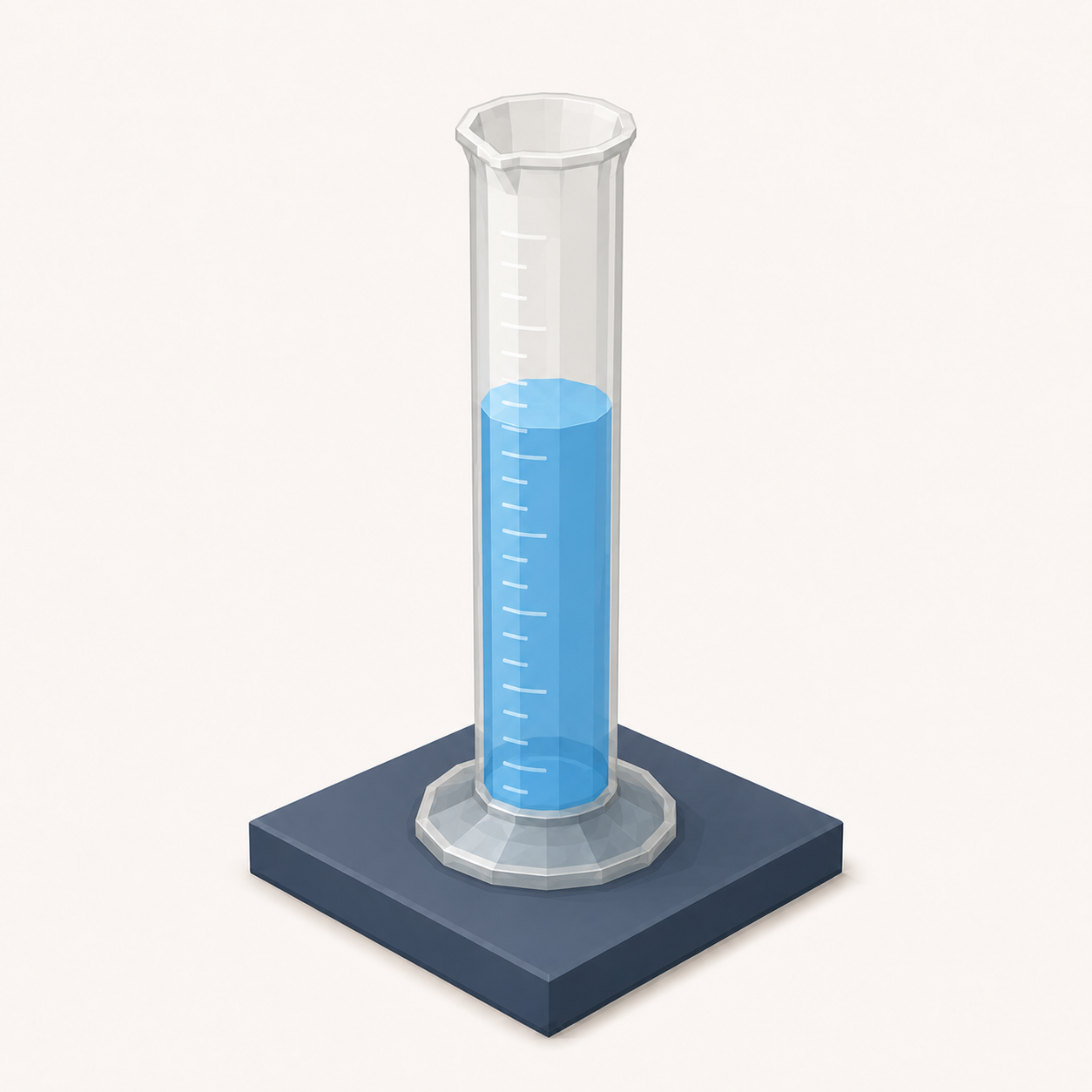
- Measuring cylinder — quick and flexible, but only reads to the nearest 0.5 cm³.
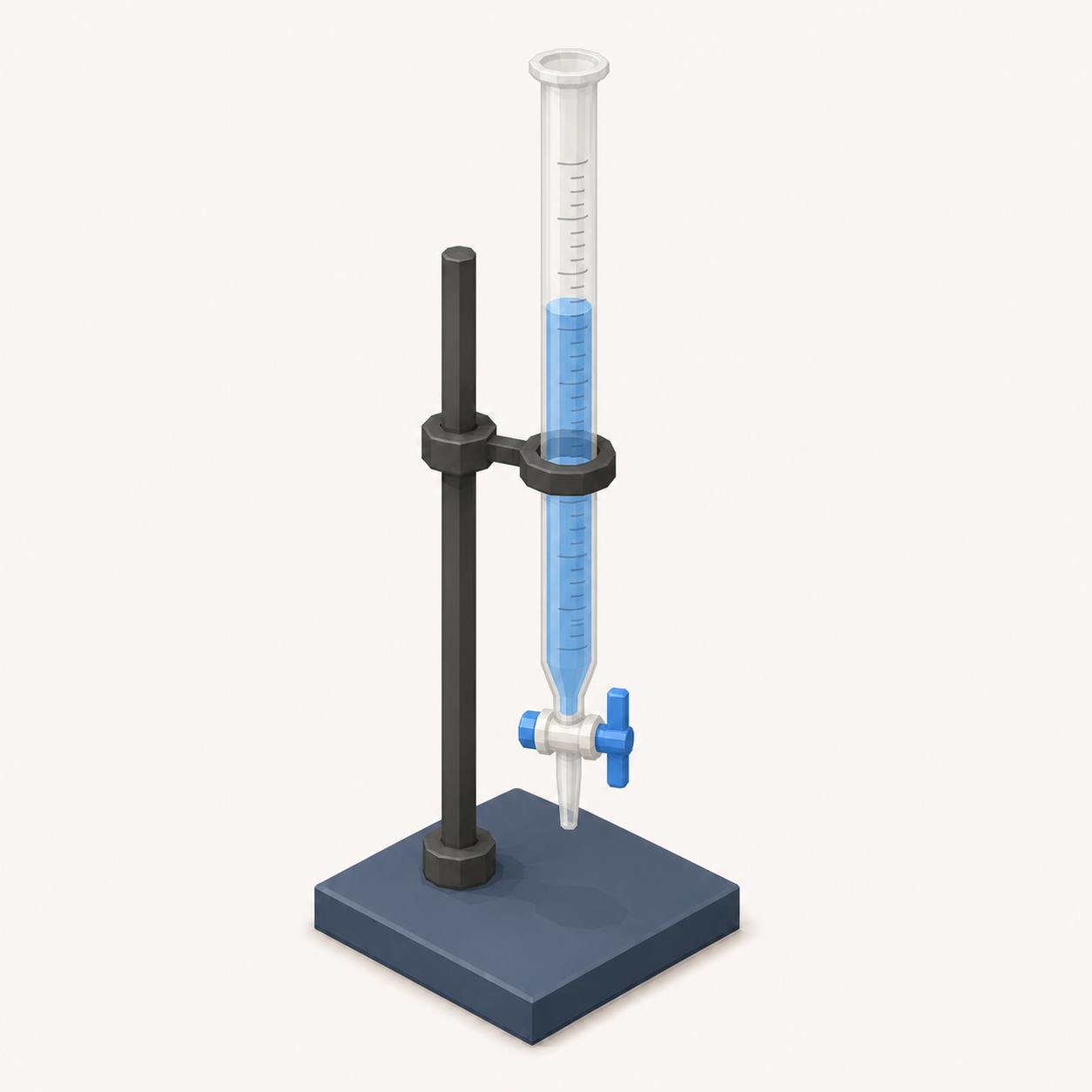
- Burette — delivers variable volumes and reads to the nearest 0.05 cm³, so it is the accurate choice when the volume is not fixed in advance.
- Gas syringe — measures the volume of a gas.
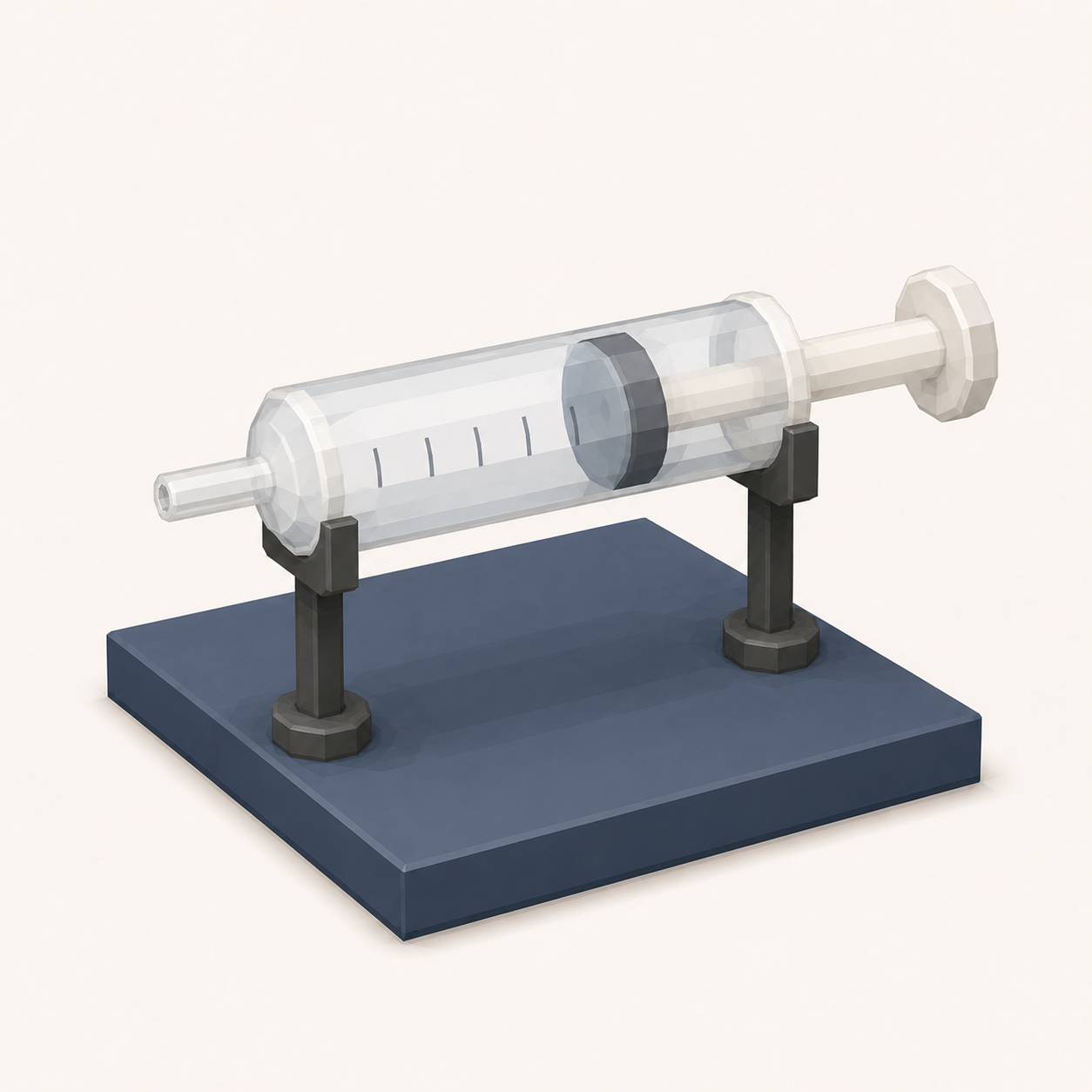
Reading the meniscus
The curved surface of a liquid in a narrow tube is called the meniscus. Always read it with your eye level with the liquid surface to avoid parallax error. Water curves downwards (concave), so you read the bottom of the curve. Mercury bulges upwards (convex), so you read the top.
2. Collecting and drying gases
How you collect a gas depends on two properties: how soluble it is in water, and whether it is denser or less dense than air.
| Collection method | Use when the gas is… | Examples |
|---|---|---|
| Displacement of water | insoluble, or only slightly soluble, in water | hydrogen, oxygen, carbon dioxide |
| Downward delivery | denser than air (the gas sinks and fills the jar from the bottom) | chlorine, hydrogen chloride, sulfur dioxide |
| Upward delivery | less dense than air (the gas rises into an upside-down jar) | ammonia |
| Gas syringe | you need an accurate volume of the gas | any gas whose volume must be measured |
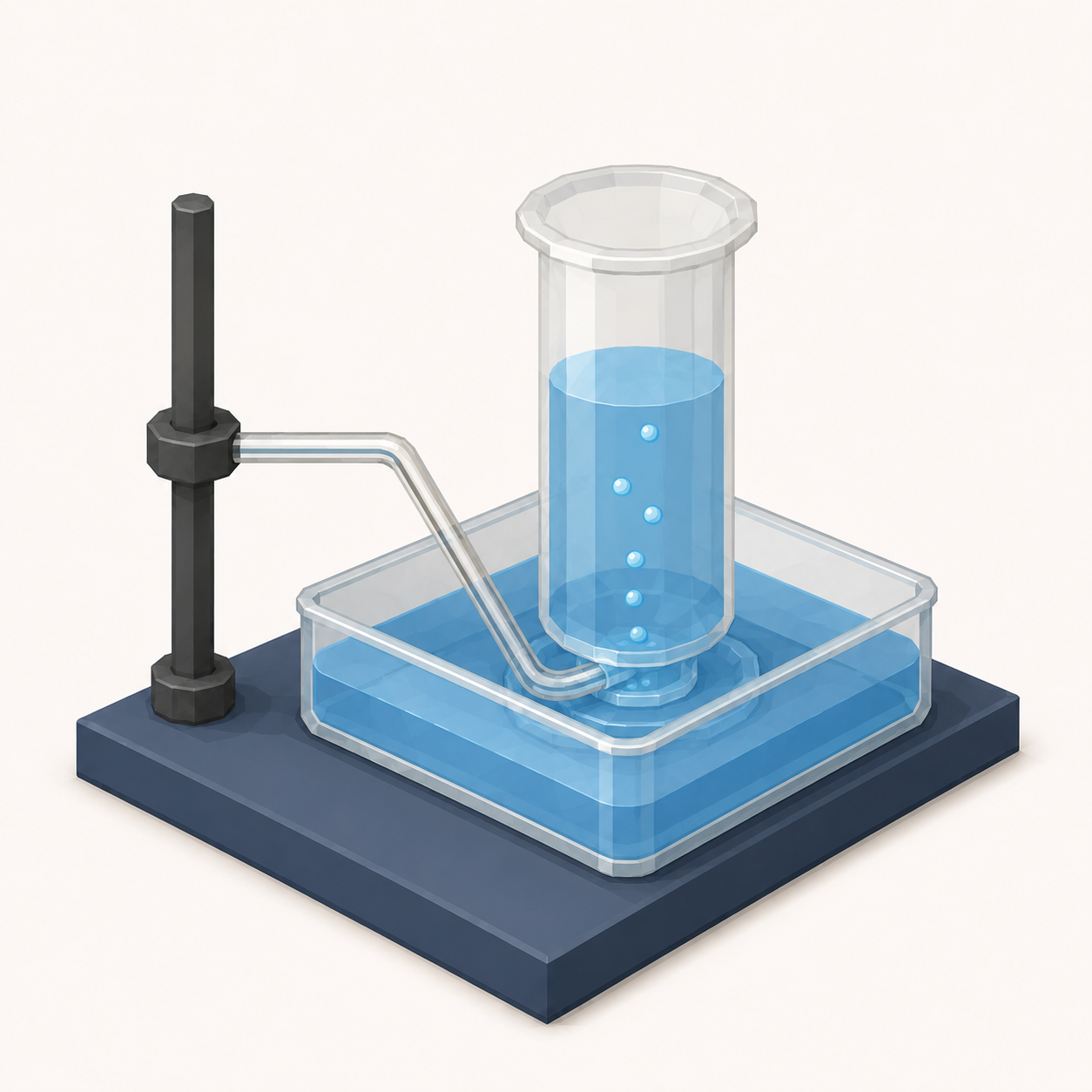
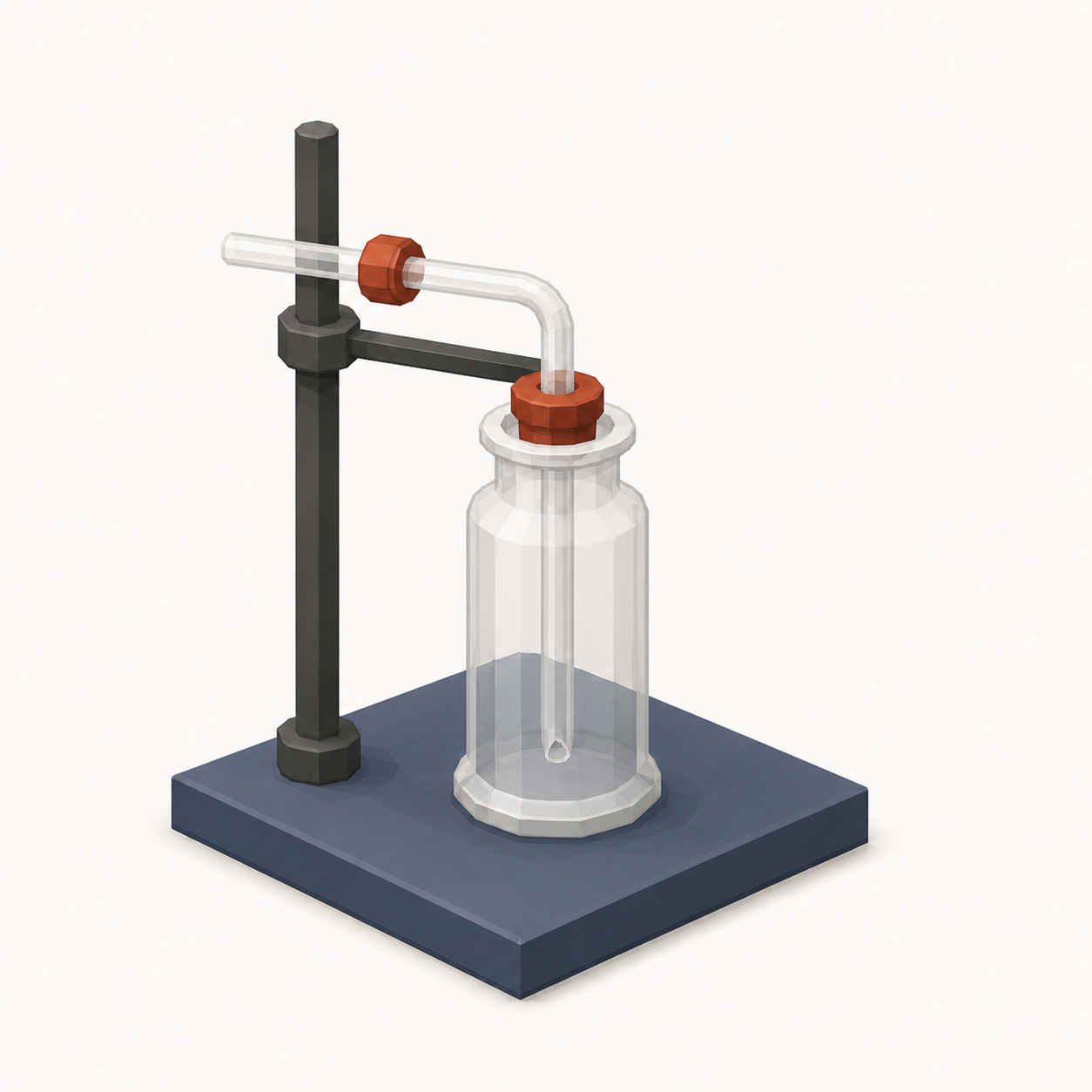
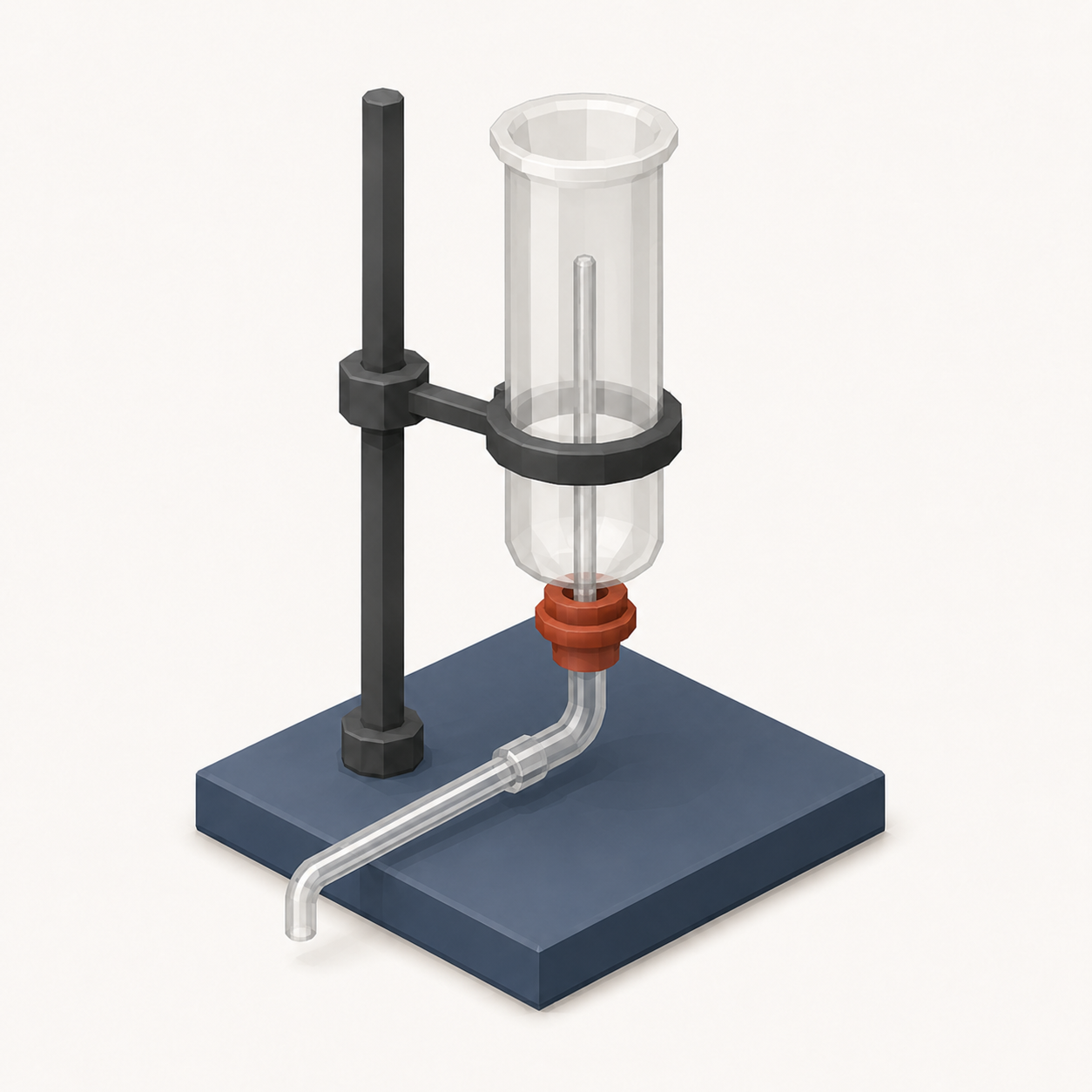
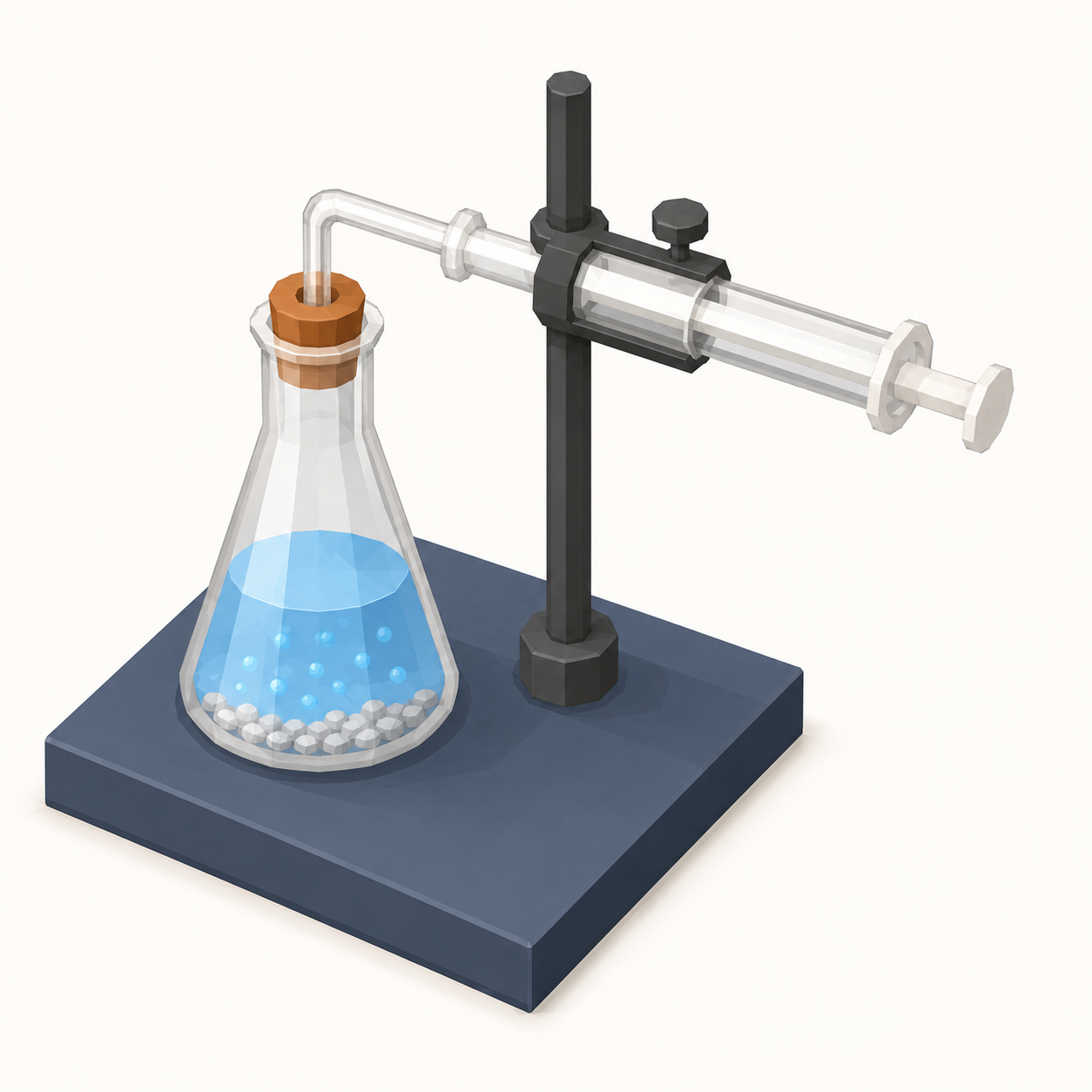
Drying a gas Optional for G3/G2 ScChem
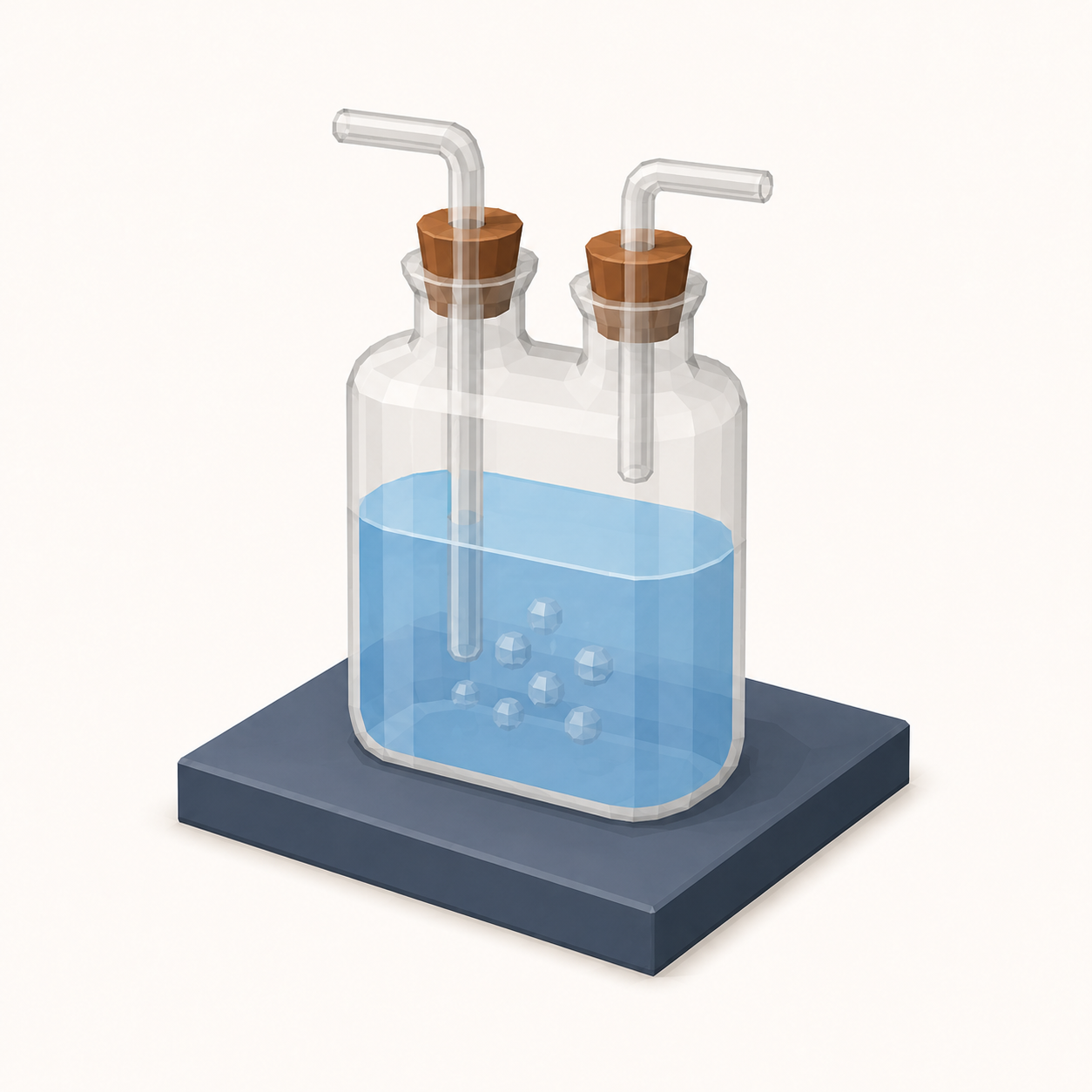
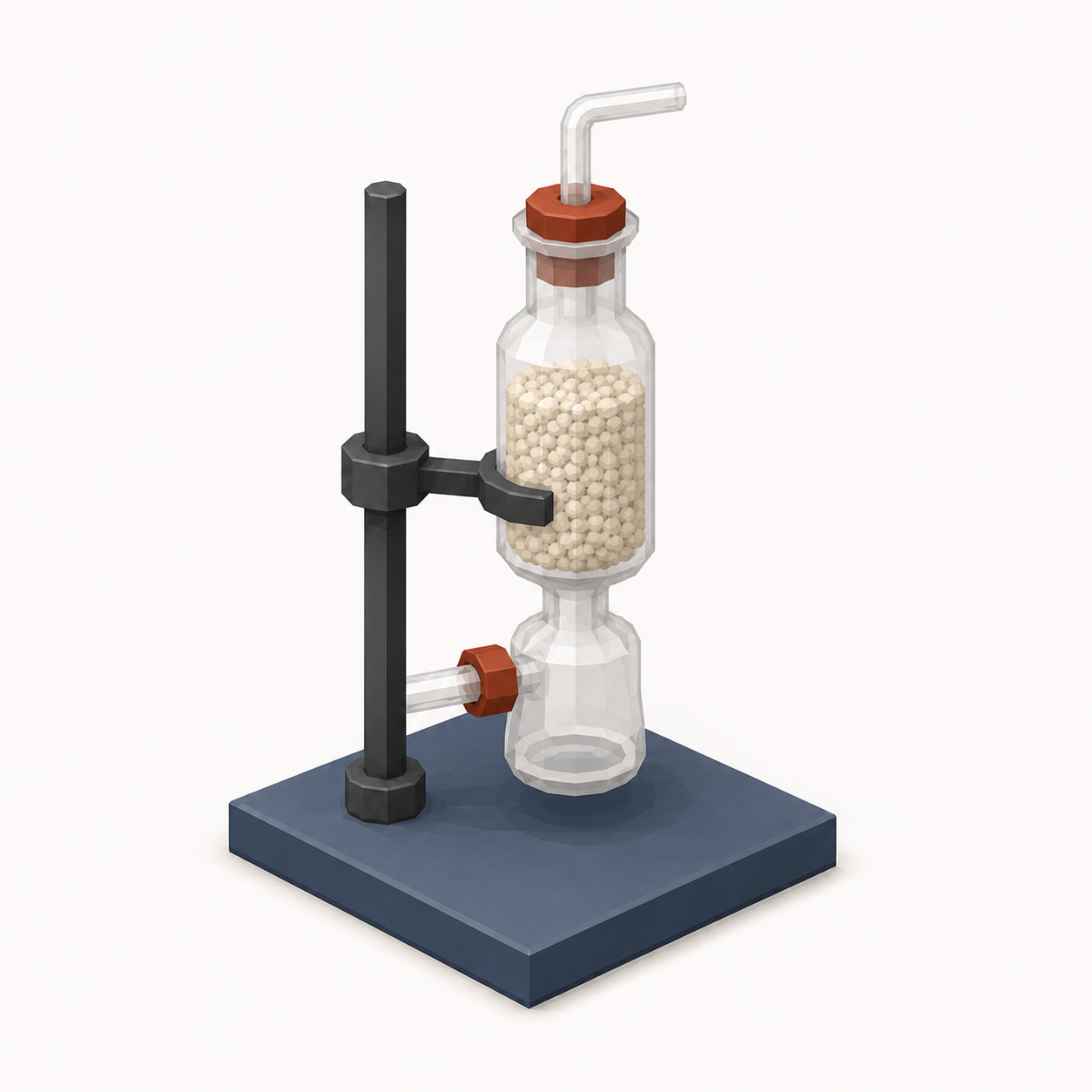
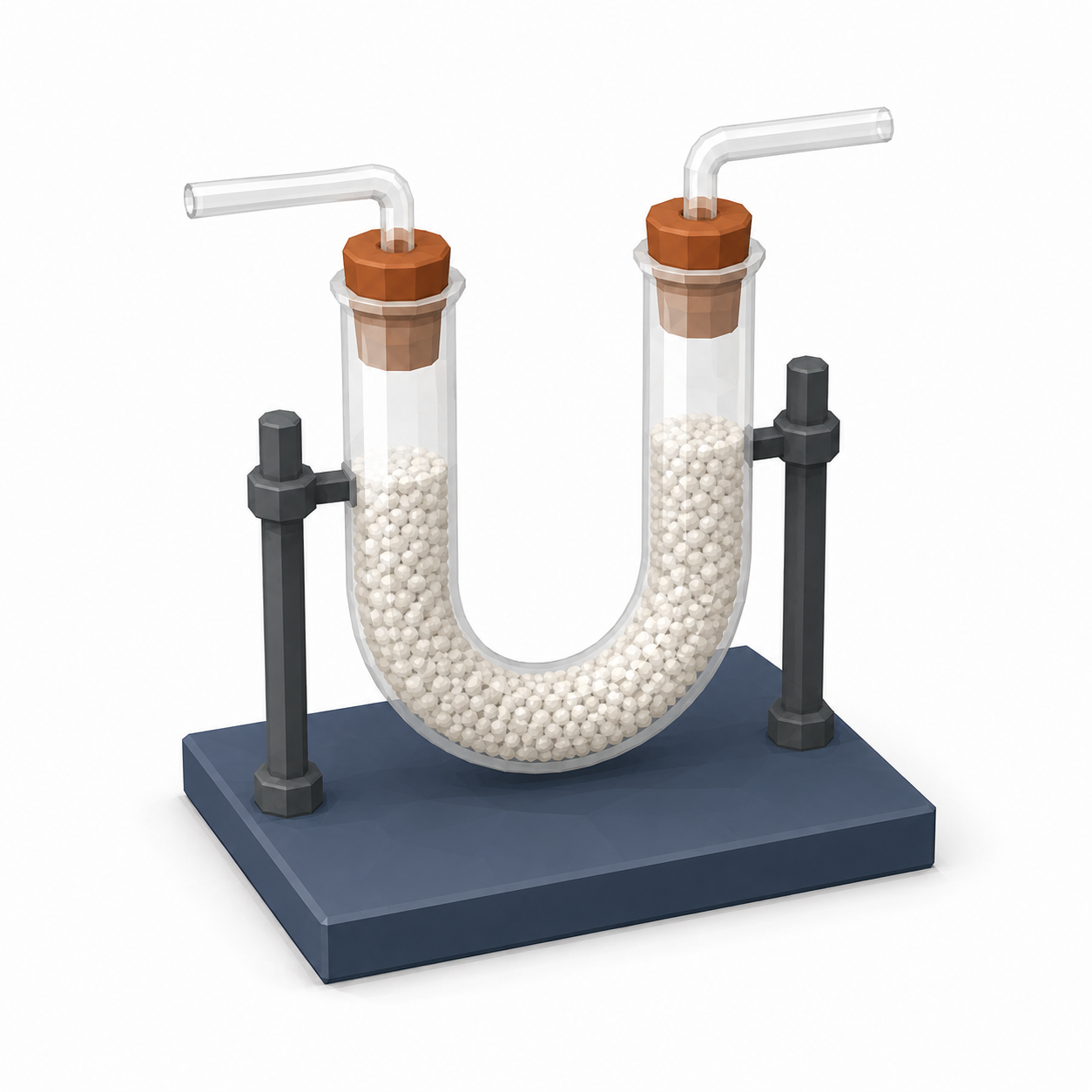
A collected gas is often damp. Pass it through (or over) a drying agent — but pick one that does not react with the gas itself:
| Drying agent | Good for | Never use with |
|---|---|---|
| Concentrated sulfuric acid | most gases | ammonia (an alkaline gas — it reacts with the acid) |
| Quicklime (calcium oxide) | ammonia | carbon dioxide (an acidic gas — it reacts with the basic quicklime) |
| Fused calcium chloride | hydrogen, nitrogen, carbon dioxide | ammonia (it combines with the calcium chloride) |
3. Choosing a separation technique
A mixture can be separated because each component keeps its own physical properties — particle size, solubility, density, boiling or melting point, magnetism. Every technique below simply exploits one property that the components do not share.
| Type of mixture | Technique | Use when… |
|---|---|---|
| Solid + solid | Magnetic attraction | one solid is magnetic (iron, cobalt or nickel) and the other is not. |
| Sieving | the solids have clearly different particle sizes. | |
| Using a suitable solvent | one solid dissolves in a chosen solvent and the other does not. | |
| Sublimation Optional for G3/G2 ScChem | one solid sublimes (turns straight to gas) on warming and the other does not. | |
| Solid + liquid | Filtration | the solid is insoluble — it gets trapped by the filter paper. |
| Evaporation to dryness | you want a dissolved solid back and it is heat-stable. | |
| Crystallisation | the dissolved solid would decompose if boiled dry. | |
| Simple distillation | you want to keep the liquid (solvent) as well. | |
| Liquid + liquid | Separating funnel Optional for G3/G2 ScChem | the liquids are immiscible (form separate layers). |
| Fractional distillation | the liquids are miscible but have different boiling points. | |
| Chromatography | you want to identify small amounts of dissolved substances. |
4. Separating solid–solid mixtures
Magnetic attraction
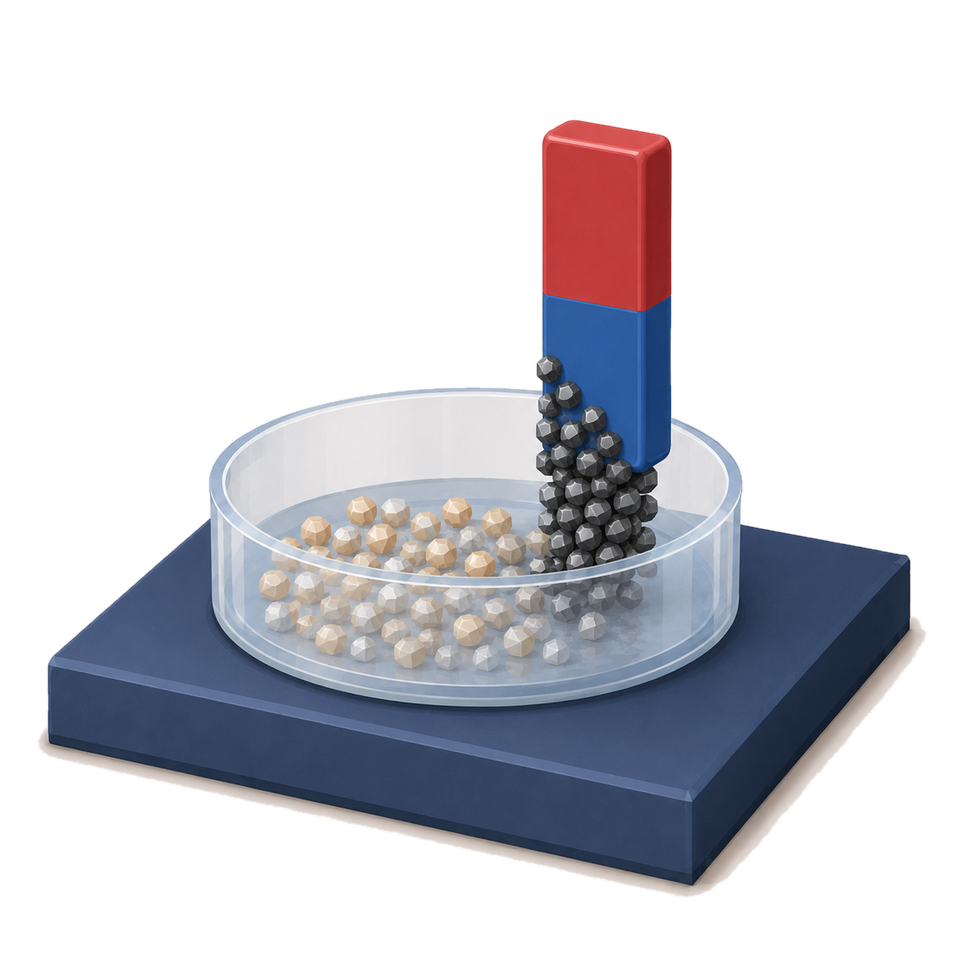
Iron, cobalt and nickel — and alloys containing them, such as steel — are attracted to a magnet, so a magnet can pull the magnetic solid cleanly out of a mixture. Recycling plants use giant electromagnets to lift steel and iron out of mixed scrap.
Sieving
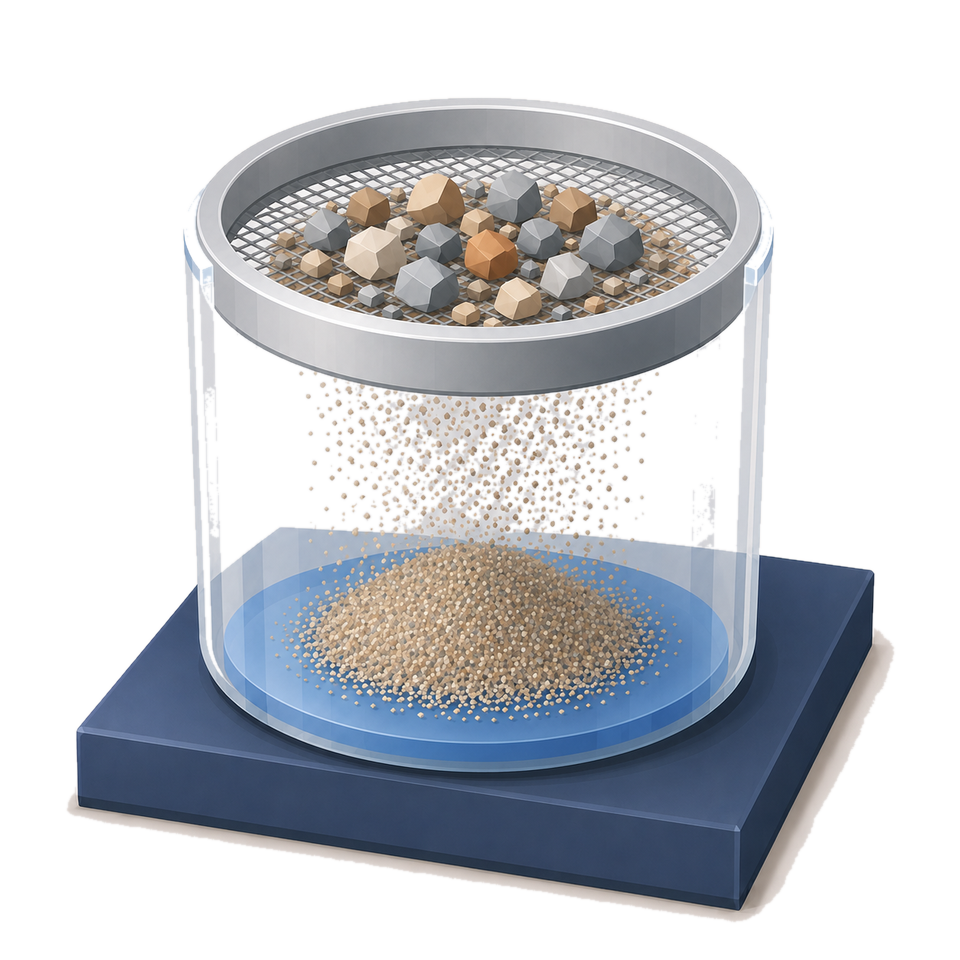
A sieve separates solids by particle size: small particles fall through the mesh, large ones stay behind. Bakers sieve flour to remove lumps, and archaeologists sieve soil so that tiny artefacts are caught while the fine earth passes through.
Using a suitable solvent
If one solid dissolves in a solvent and the other does not, add the solvent, stir, then filter. Classic example: salt mixed with sand. Water dissolves the salt but not the sand, so filtering removes the sand and evaporating or crystallising the salty filtrate gives back the salt.
Sublimation Optional for G3/G2 ScChem
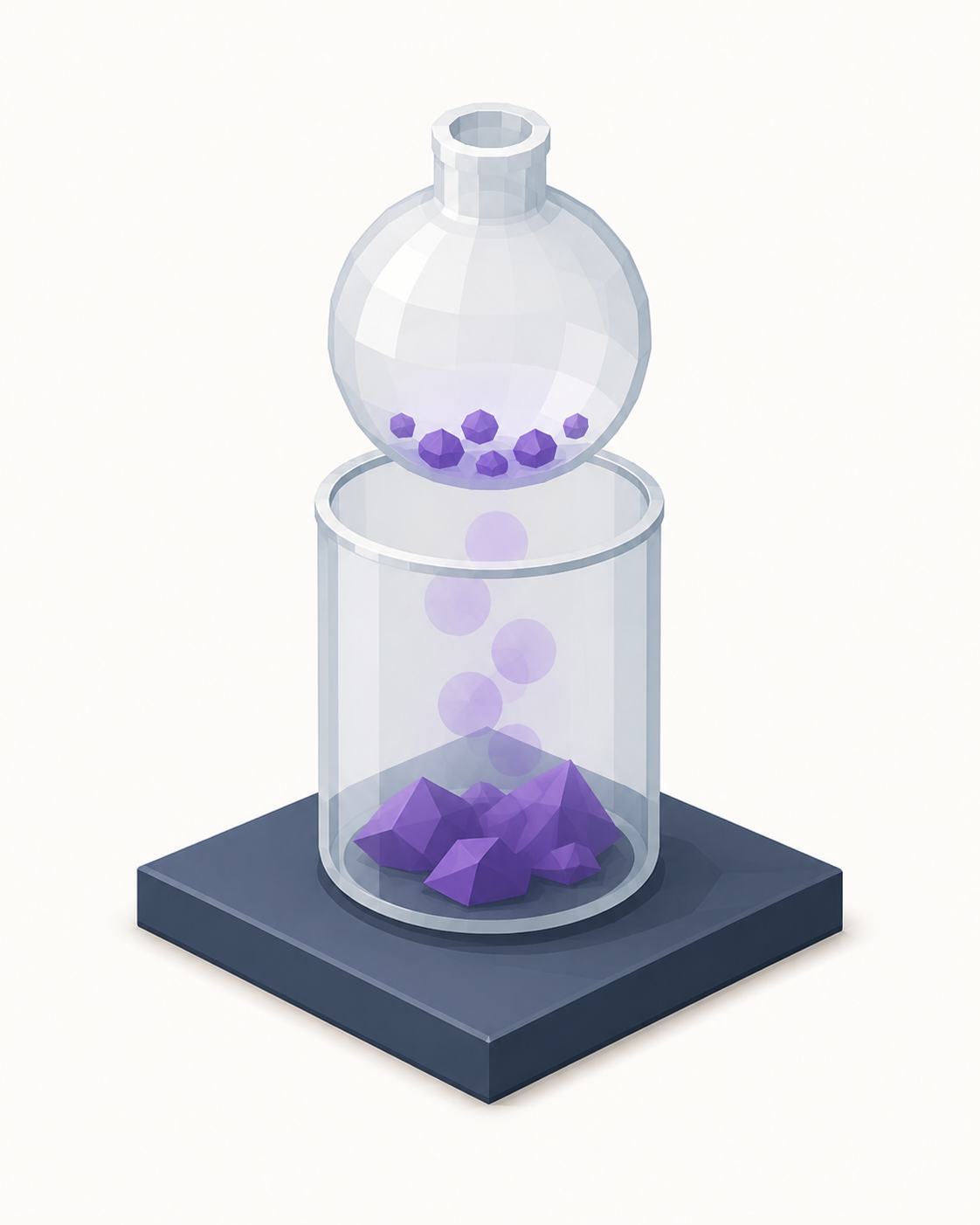
Sublimation is when a solid changes directly into a gas without melting first (and the gas turns straight back into a solid when cooled). Only a few substances do this — iodine, naphthalene (mothballs) and dry ice (solid carbon dioxide) are the ones to remember.
To separate, warm the mixture gently: the subliming solid rises as a vapour, hits a cool surface (such as a cold flask held above), and re-forms as a solid there, called the sublimate. The other solid stays in the container. Try it in the sublimation lab →
5. Separating solid–liquid mixtures
Filtration — for insoluble solids
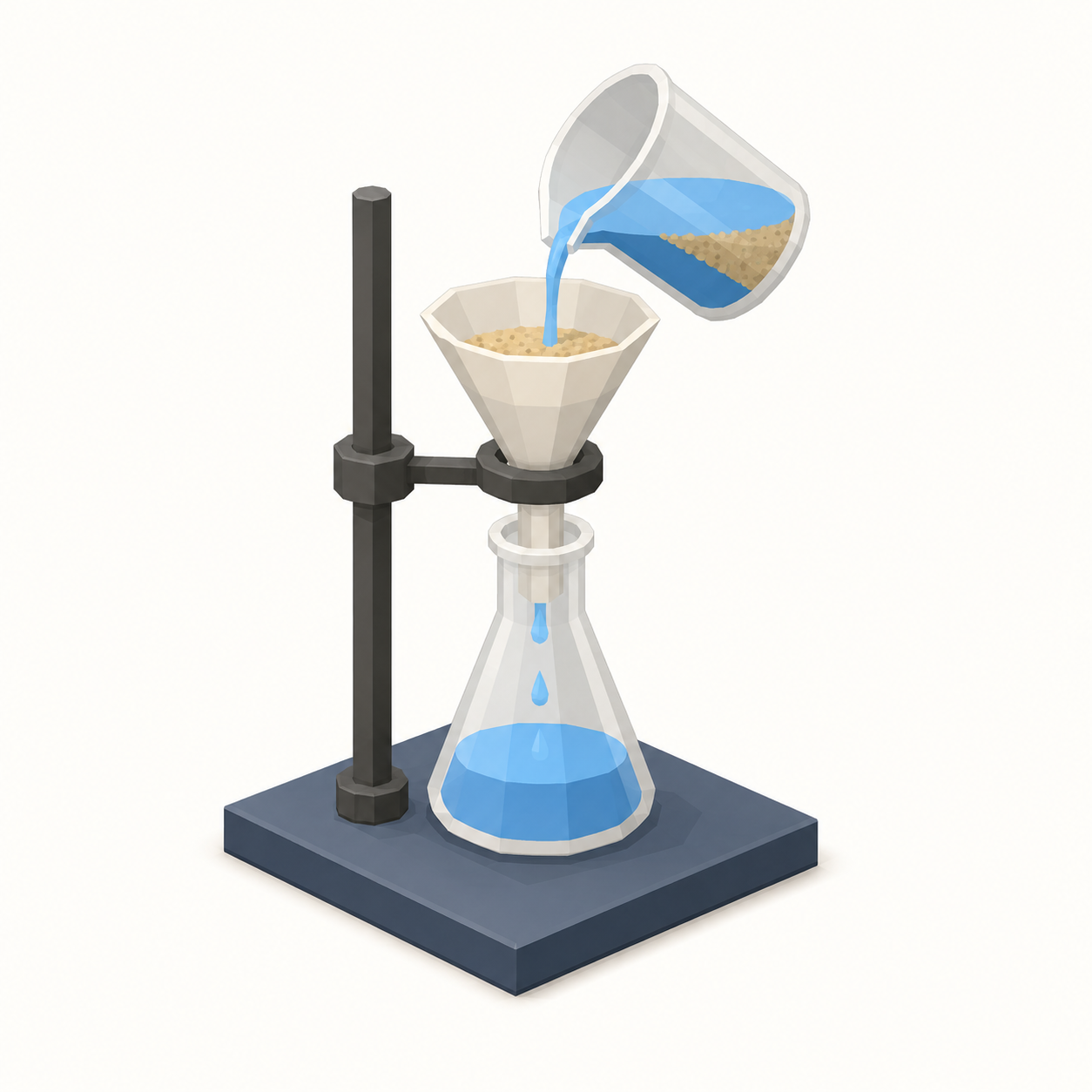
Pour the mixture through filter paper folded into a cone inside a funnel. The paper acts like an extremely fine sieve: liquid passes through its tiny pores while insoluble solid particles are too large and get trapped.
- The solid left on the paper is the residue.
- The liquid that passes through is the filtrate.
Try it in the filtration lab →
Evaporation to dryness — for dissolved solids
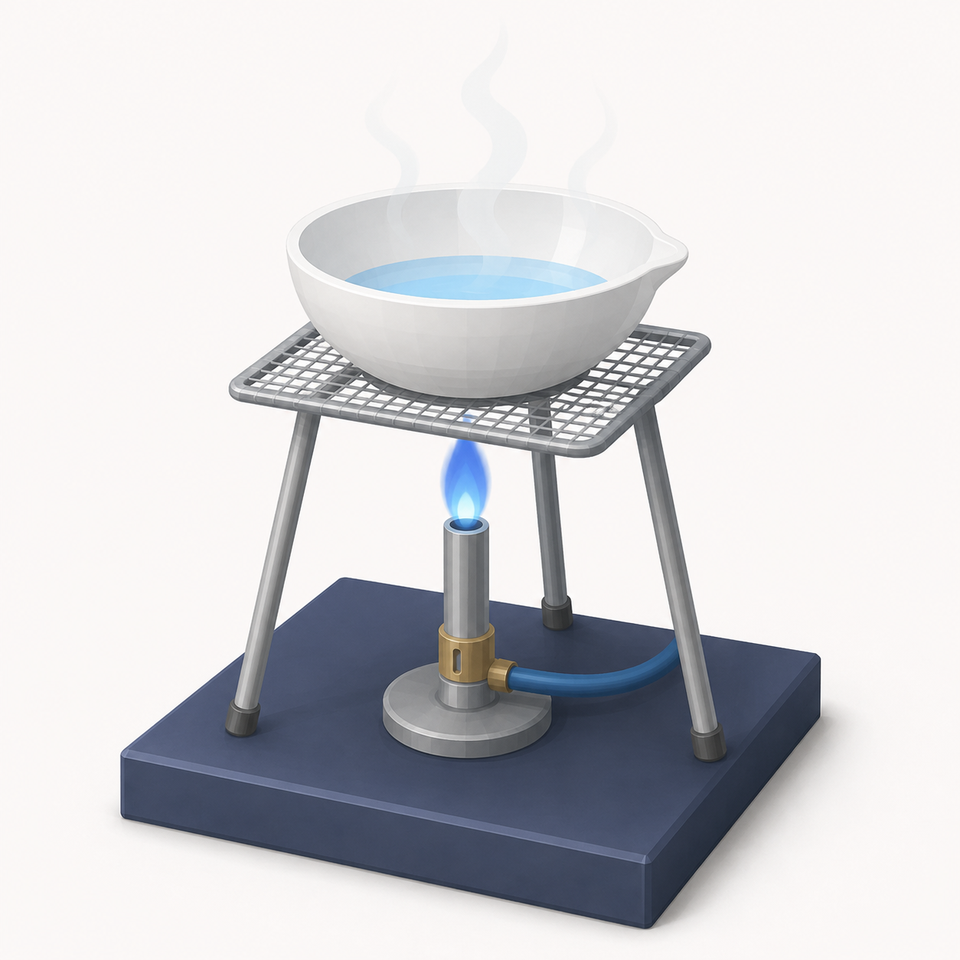
Heat the solution in an evaporating dish until all of the solvent has boiled away, leaving the solid behind. It is fast, but it has two limitations:
- Some solids decompose when heated strongly — sugar, for example, chars into a black mess instead of coming back as crystals.
- Everything dissolved comes out together, so the solid you get may actually be a mixture of several salts, not one pure substance.
Crystallisation — the gentler option
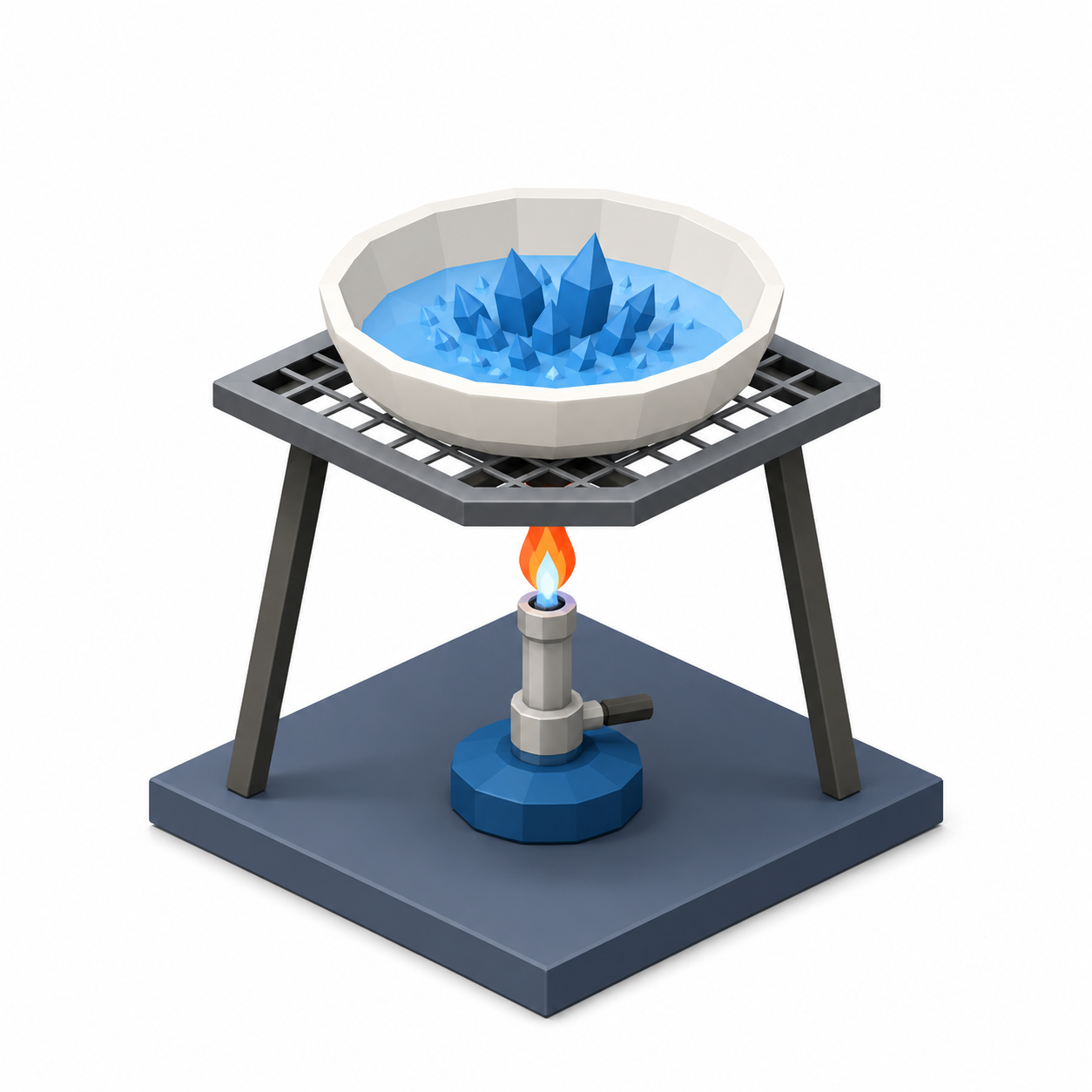
Because heat-sensitive solids survive gentle treatment, crystallisation is used when evaporation to dryness would destroy the product:
- Heat the solution gently to evaporate some solvent and concentrate it until it is just saturated.
- Let it cool slowly — as the temperature drops, the solvent can hold less solute, so the excess comes out as crystals.
- Filter to collect the crystals.
- Wash them with a little cold solvent and dry them between sheets of filter paper.
Simple distillation — when you want the liquid too
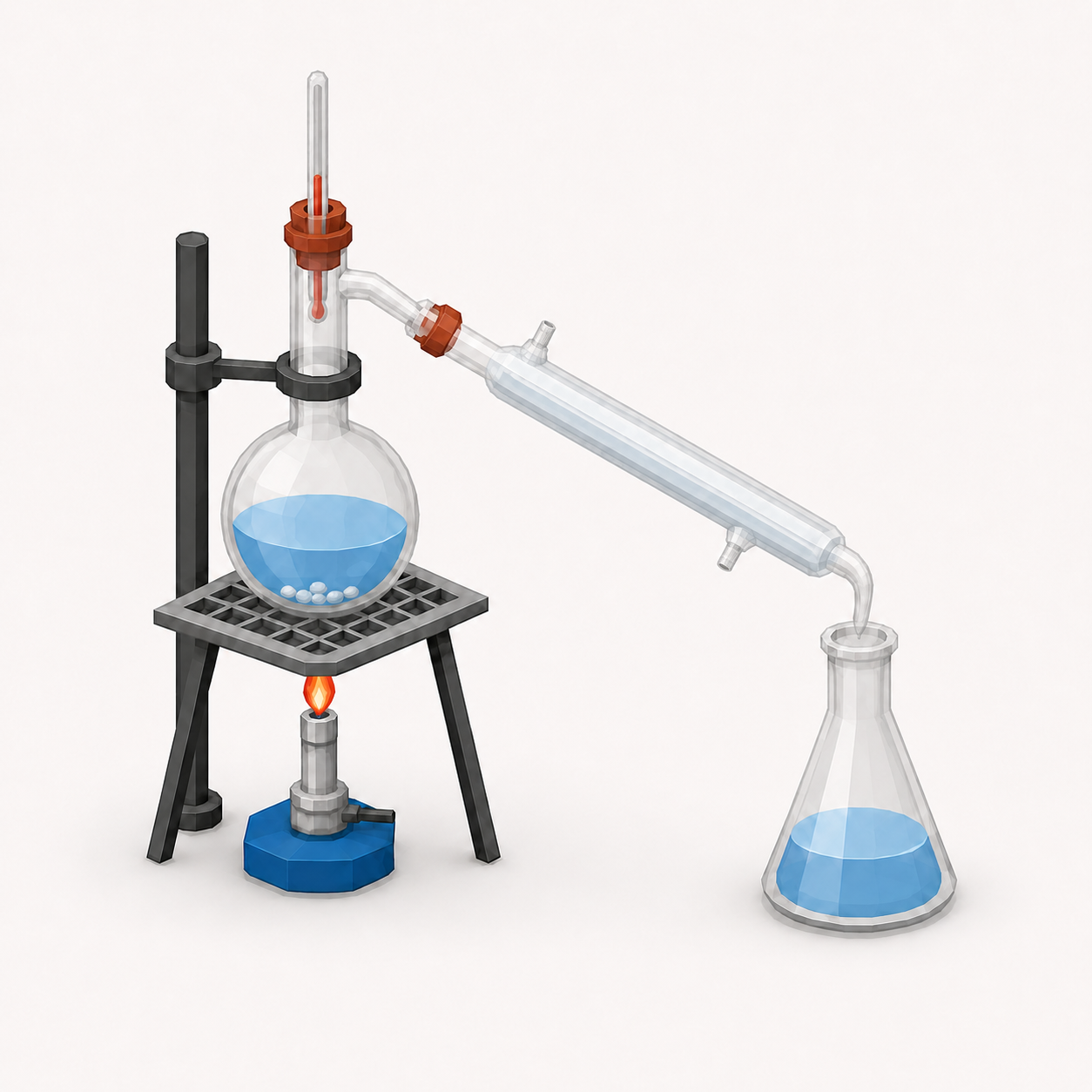
Evaporation and crystallisation throw the solvent away as vapour. If you want to keep both parts — say, drinking water from sea water — use simple distillation. The solution is boiled; the solvent vapour travels into a cooled condenser where it turns back into liquid, called the distillate, and drips into a receiver. The dissolved solute stays behind in the flask because its boiling point is far higher. Try it in the distillation lab →
Which one should I pick?
| Evaporation to dryness | Crystallisation | Simple distillation | |
|---|---|---|---|
| What you keep | the solid only | the solid only (as clean crystals) | the solvent (distillate) and the solute |
| Heating | strong — boil everything away | gentle — concentrate, then cool | boil, but the solvent is recovered |
| Best when | the solid is heat-stable | the solid decomposes on strong heating | the solvent is valuable too |
6. Separating liquid–liquid mixtures
Immiscible liquids — separating funnel Optional for G3/G2 ScChem
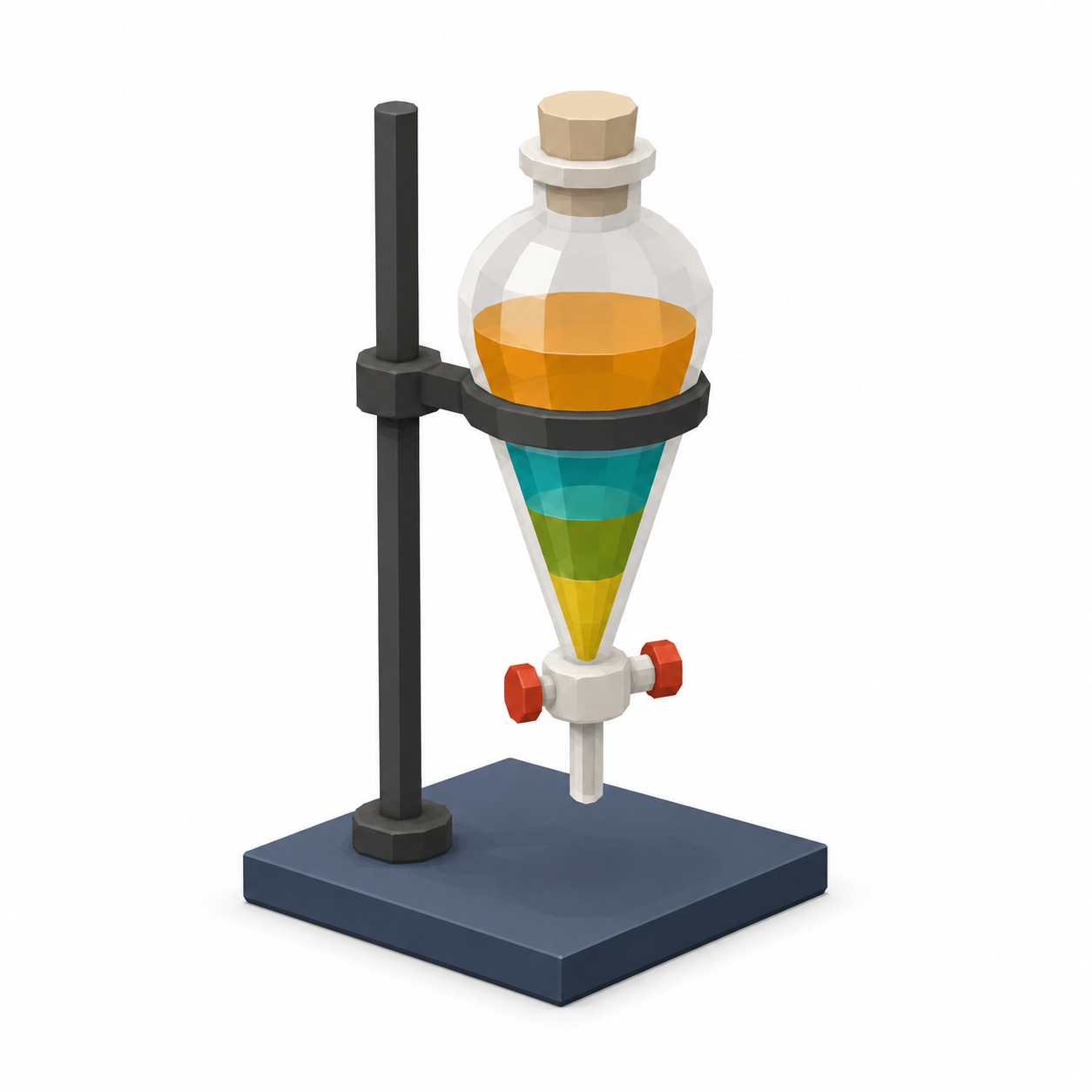
Immiscible liquids, like oil and water, do not mix — they settle into layers, with the denser liquid at the bottom. Pour the mixture into a separating funnel, let the layers settle, then open the tap: the bottom layer runs out into a beaker. Close the tap the moment the boundary reaches it, and the two liquids are apart. Try it in the separating-funnel lab →
Miscible liquids — fractional distillation
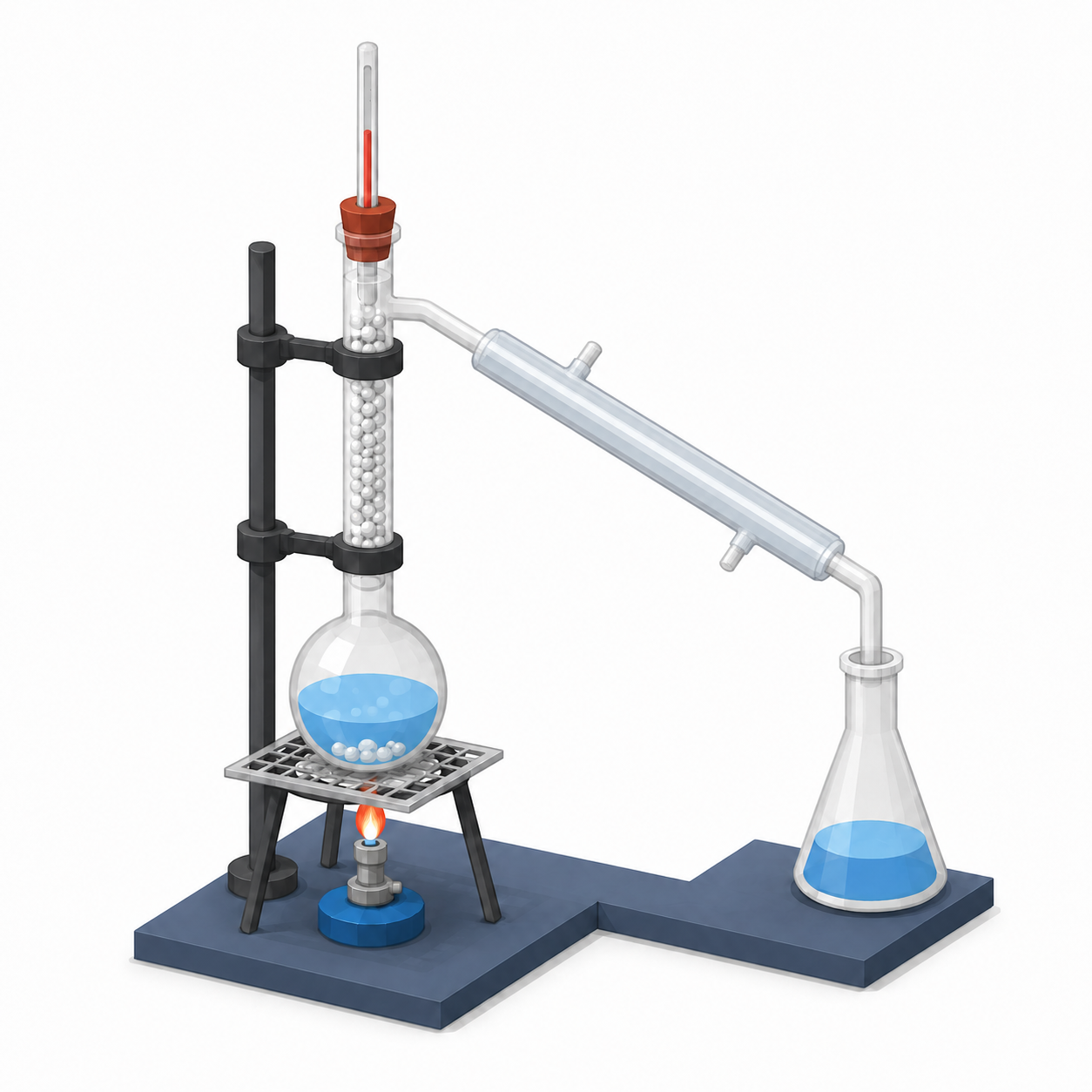
Miscible liquids (like ethanol and water) mix completely, so there is no layer to drain. Instead we use their different boiling points. A fractionating column packed with glass beads sits between the flask and the condenser. The beads give a huge surface where vapour repeatedly condenses and re-evaporates, so only the substance with the lowest boiling point makes it to the top first.
Watch the thermometer: it plateaus (stays steady) at the boiling point of whichever liquid is currently distilling over — for ethanol that is 78 °C. When the reading starts climbing again, the first liquid has finished and it is time to change receivers.
Industry runs on this idea: crude oil is split into petrol, kerosene and other fractions in giant columns; liquefied air is fractionally distilled to obtain nitrogen, oxygen and argon; and breweries use it to concentrate alcohol. Try it in the fractional distillation lab →
Chromatography — identifying what is in a mixture
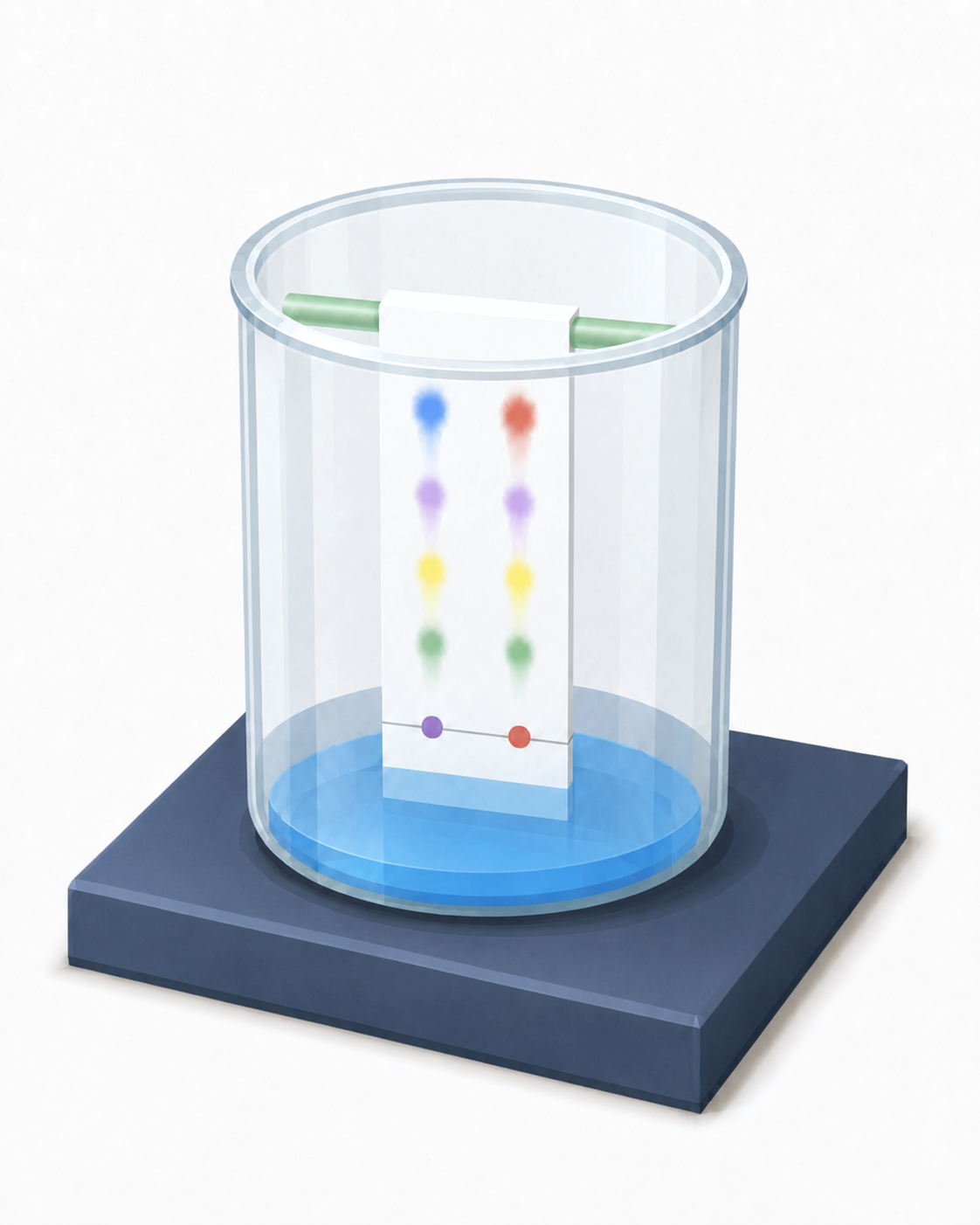
Paper chromatography separates small amounts of dissolved substances. A spot of the mixture is placed on a start line drawn in pencil near the bottom of the paper (pencil, not pen — graphite is insoluble, so the line itself cannot travel and confuse the result). The paper stands in a shallow solvent. As the solvent soaks upwards, it carries the substances with it — the more soluble a substance is in that solvent, the further it travels. The finished paper, with its separated spots, is called a chromatogram.
= distance moved by the substance ÷ distance moved by the solvent.
Under the same solvent and temperature, a substance always gives the same Rf — so you can identify an unknown spot by comparing its Rf with known substances run on the same paper.
Colourless substances such as amino acids and sugars leave invisible spots. Spray the paper with a locating agent that reacts with them to give coloured spots, or view the chromatogram under ultraviolet light.
Chromatography is used to check food additives are safe and permitted, to test athletes' samples for banned drugs, and in forensic work such as comparing inks, dyes or drugs in samples from a crime scene. Try it in the chromatography lab →
7. Testing for purity
A pure substance contains only one substance, so it has a sharp, fixed melting point and boiling point. A mixture melts and boils over a range of temperatures instead — and the more impurity there is, the bigger the shift.
- Dissolved impurities raise the boiling point.
- Dissolved impurities lower the melting point — which is exactly why salt is spread on icy roads: salty ice melts below 0 °C.
A medicine containing the wrong impurity could harm a patient, and the silicon used for computer chips must be extraordinarily pure or the chips simply do not work.
8. Try the labs
The best way to remember a technique is to run it. Each simulation lets you set up and perform the experiment yourself:
- 🧪 Filtration — separate an insoluble solid from a liquid.
- ♨️ Evaporation — boil a solution to dryness to recover the dissolved solid.
- 🔷 Crystallisation — stop at saturation and cool for pure crystals.
- 💧 Simple distillation — recover pure water from salt water.
- 🌡️ Fractional distillation — split ethanol from water at 78 °C.
- 🫙 Separating funnel — drain oil off water, layer by layer.
- 🔮 Sublimation — catch iodine vapour on a cold flask.
- 🎨 Paper chromatography — separate an ink, then calculate and compare Rf values obtained under the same experimental conditions.
9. Syllabus at a glance (2023)
What topic 1 Experimental Chemistry asks you to be able to do. The three syllabuses word their outcomes differently — pick your own tab to see exactly what you are assessed on.
G3 Pure Chemistry — the full Chemistry syllabus — these notes are written to it.
| LO | What you must be able to do — 2023 O-Level Chemistry | Covered in |
|---|---|---|
| 1.1(a) | name appropriate apparatus for the measurement of time, temperature, mass and volume; including burettes, pipettes, measuring cylinders and gas syringes | 1 |
| 1.1(b) | suggest suitable apparatus, given relevant information, for a variety of simple experiments, including drying and collection of gases and measurement of rates of reaction (drying agents will be limited to calcium oxide, concentrated sulfuric acid and fused calcium chloride) | 2 |
| 1.2(a) | describe methods of separation and purification for the components of mixtures, to include: (i) use of a suitable solvent, filtration and crystallisation or evaporation (ii) sublimation (iii) distillation and fractional distillation (see also 11.1(b)) (iv) use of a separating funnel (v) paper chromatography | 3 |
| 1.2(b) | suggest suitable separation and purification methods, given information about the substances involved in the following types of mixtures: (i) solid-solid (ii) solid-liquid (iii) liquid-liquid (miscible and immiscible) | 3 |
| 1.2(c) | interpret paper chromatograms including comparison with 'known' samples and the use of Rf values | 6 |
| 1.2(d) | explain the need to use locating agents in the chromatography of colourless compounds (knowledge of specific locating agents is not required) | 6 |
| 1.2(e) | deduce from the given melting point and boiling point data the identities of substances and their purity | 7 |
| 1.2(f) | explain the importance of measuring the purity in substances used in everyday life, e.g. foodstuffs and drugs | 7 |
G3 Science (Chemistry) — fewer outcomes than Pure, and several are worded more simply.
| LO | What you must be able to do — 2023 O-Level Science (Chemistry) | Covered in |
|---|---|---|
| 1.1(a) | name appropriate apparatus for the measurement of time, temperature, mass and volume; including burettes, pipettes, measuring cylinders and gas syringes | 1 |
| 1.1(b) | suggest suitable apparatus, given relevant information, for a variety of simple experiments, including collection of gases and measurement of rates of reaction | 2 |
| 1.2(a) | describe methods of separation and purification for the components of mixtures, to include: (i) use of a suitable solvent, filtration and crystallisation or evaporation (ii) distillation and fractional distillation (see also 11.1(b)) (iii) paper chromatography | 3 |
| 1.2(b) | suggest suitable separation and purification methods, given information about the substances involved in the following types of mixtures: (i) solid-solid (ii) solid-liquid (iii) liquid-liquid (miscible) | 3 |
| 1.2(c) | interpret paper chromatograms including comparison with 'known' samples (the use of Rf values is not required) | 6 |
| 1.2(d) | deduce from the given melting point and boiling point data the identities of substances and their purity | 7 |
G2 Science (Chemistry) — the smallest set — some whole topics are not examined.
| LO | What you must be able to do — 2023 N-Level Science (Chemistry) | Covered in |
|---|---|---|
| 1.1(a) | name appropriate apparatus for the measurement of time, temperature, mass and volume; including burettes, pipettes, measuring cylinders and gas syringes | 1 |
| 1.1(b) | suggest suitable apparatus, given relevant information, for a variety of simple experiments, including collection of gases | 2 |
| 1.2(a) | describe methods of separation and purification for the components of mixtures, to include: (i) use of a suitable solvent, filtration and crystallisation or evaporation (ii) distillation and fractional distillation (see also 8.1(b)) (iii) paper chromatography | 3 |
| 1.2(b) | suggest suitable separation and purification methods, given information about the substances involved in the following types of mixtures: (i) solid-solid (ii) solid-liquid (iii) liquid-liquid (miscible) | 3 |
| 1.2(c) | interpret paper chromatograms including comparison with 'known' samples (the use of Rf values is not required) | 6 |
| 1.2(d) | deduce from the given melting point and boiling point data the identities of substances and their purity | 7 |
All three side by side, in the same rows as the MOE comparison document. Highlighted wording is where the syllabuses differ; – means that syllabus does not ask for it. Note the letters drift out of step once an outcome is dropped.
| G3 Pure2023 O-Level Chemistry | G3 ScChem2023 O-Level Science (Chemistry) | G2 ScChem2023 N-Level Science (Chemistry) |
|---|---|---|
| 1.1(a) name appropriate apparatus for the measurement of time, temperature, mass and volume; including burettes, pipettes, measuring cylinders and gas syringes | 1.1(a) name appropriate apparatus for the measurement of time, temperature, mass and volume; including burettes, pipettes, measuring cylinders and gas syringes | 1.1(a) name appropriate apparatus for the measurement of time, temperature, mass and volume; including burettes, pipettes, measuring cylinders and gas syringes |
| 1.1(b) suggest suitable apparatus, given relevant information, for a variety of simple experiments, including drying and collection of gases and measurement of rates of reaction (drying agents will be limited to calcium oxide, concentrated sulfuric acid and fused calcium chloride) | 1.1(b) suggest suitable apparatus, given relevant information, for a variety of simple experiments, including collection of gases and measurement of rates of reaction | 1.1(b) suggest suitable apparatus, given relevant information, for a variety of simple experiments, including collection of gases |
| 1.2(a) describe methods of separation and purification for the components of mixtures, to include: (i) use of a suitable solvent, filtration and crystallisation or evaporation (ii) sublimation (iii) distillation and fractional distillation (see also 11.1(b)) (iv) use of a separating funnel (v) paper chromatography | 1.2(a) describe methods of separation and purification for the components of mixtures, to include: (i) use of a suitable solvent, filtration and crystallisation or evaporation (ii) distillation and fractional distillation (see also 11.1(b)) (iii) paper chromatography | 1.2(a) describe methods of separation and purification for the components of mixtures, to include: (i) use of a suitable solvent, filtration and crystallisation or evaporation (ii) distillation and fractional distillation (see also 8.1(b)) (iii) paper chromatography |
| 1.2(b) suggest suitable separation and purification methods, given information about the substances involved in the following types of mixtures: (i) solid-solid (ii) solid-liquid (iii) liquid-liquid (miscible and immiscible) | 1.2(b) suggest suitable separation and purification methods, given information about the substances involved in the following types of mixtures: (i) solid-solid (ii) solid-liquid (iii) liquid-liquid (miscible) | 1.2(b) suggest suitable separation and purification methods, given information about the substances involved in the following types of mixtures: (i) solid-solid (ii) solid-liquid (iii) liquid-liquid (miscible) |
| 1.2(c) interpret paper chromatograms including comparison with 'known' samples and the use of Rf values | 1.2(c) interpret paper chromatograms including comparison with 'known' samples (the use of Rf values is not required) | 1.2(c) interpret paper chromatograms including comparison with 'known' samples (the use of Rf values is not required) |
| 1.2(d) explain the need to use locating agents in the chromatography of colourless compounds (knowledge of specific locating agents is not required) | – | – |
| 1.2(e) deduce from the given melting point and boiling point data the identities of substances and their purity | 1.2(d) deduce from the given melting point and boiling point data the identities of substances and their purity | 1.2(d) deduce from the given melting point and boiling point data the identities of substances and their purity |
| 1.2(f) explain the importance of measuring the purity in substances used in everyday life, e.g. foodstuffs and drugs | – | – |
Wording is quoted verbatim from the 2023 syllabuses. G3 Pure = O-Level Chemistry · G3 ScChem = O-Level Science (Chemistry) · G2 ScChem = N-Level Science (Chemistry). Numbering differs between them: G2 ScChem has no Redox, Chemical Energetics or Rate of Reactions, so its later topics are numbered lower.